
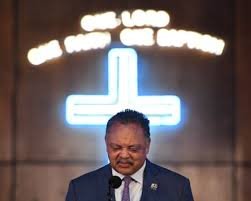
Jesse Jackson: A Legacy of Civil Rights and Political Activism
The Reverend Jesse Jackson, a towering figure in the Civil Rights Movement and Democratic politics for over five decades, has passed away at the age of 84. A close confidant of Martin Luther King Jr., Jackson’s influence spanned generations, marked by his passionate advocacy for the marginalized and his groundbreaking presidential campaigns.
A Life Dedicated to Justice
“Our father was a servant leader – not only to our family, but to the oppressed, the voiceless, and the overlooked around the world,” the Jackson family shared in a statement. He faced progressive supranuclear palsy (PSP) for over a decade, following an initial diagnosis of Parkinson’s disease, and also battled Covid-19 in recent years. Despite these challenges, his commitment to justice remained unwavering.
Early Activism and Mentorship Under Dr. King
Jackson’s journey began in the segregated South, where he quickly demonstrated leadership qualities. As a student, he challenged racial barriers, notably participating in a peaceful protest at the Greenville, South Carolina public library in 1960 – an event that led to the library’s integration after a federal lawsuit. This early experience fueled his lifelong dedication to equality.
His path intersected with Dr. Martin Luther King Jr. in the early 1960s, forging a mentorship that profoundly shaped Jackson’s activism. He joined King in Selma, Alabama, witnessing firsthand the brutality of the Civil Rights struggle and earning King’s trust. Jackson then became deeply involved with the Southern Christian Leadership Conference (SCLC), eventually leading Operation Breadbasket, an initiative focused on economic empowerment within Black communities.
Presidential Aspirations and the Rainbow Coalition
Jackson’s political ambitions led him to seek the Democratic presidential nomination in 1984 and again in 1988. While he didn’t secure the nomination, his campaigns were historic, galvanizing Black voters and raising critical issues of social and economic justice. He famously stated at the 1984 Democratic National Convention: “Our mission to feed the hungry, to clothe the naked, to house the homeless…to choose the human race over the nuclear race.”
Following his first presidential run, Jackson founded the National Rainbow Coalition, later merging it with PUSH to create the Rainbow Push Coalition. This organization has provided millions in scholarships and financial assistance, continuing Jackson’s commitment to educational and economic equality. Learn more about the Rainbow Push Coalition’s work.
A Lasting Impact
Throughout his life, Jackson remained a vocal advocate for civil rights, even in the face of new challenges. He criticized disparities in healthcare during the Covid-19 pandemic and spoke out against systemic racism. In 2000, President Bill Clinton awarded him the Presidential Medal of Freedom, recognizing his decades of service. He continued to champion Dr. King’s vision of a multiracial, multicultural society, even through the rise of Donald Trump and the Black Lives Matter movement.
“Dr King believed in multiracial, multicultural coalitions of conscience,” Jackson reflected in 2018. “He felt nationalism – whether Black, white or brown – was narrowly conceived, given our global challenges.” His legacy serves as a powerful reminder that the fight for justice is ongoing and requires constant effort.
Jesse Jackson’s life was a testament to the power of faith, perseverance, and a unwavering belief in the possibility of a more just and equitable world. His contributions to the Civil Rights Movement and his dedication to uplifting the marginalized will continue to inspire generations to come.



