
The Strategic Dilemma: Is the U.S. Military ‘Going Winchester’?
In the high-stakes world of global geopolitics, the term “going Winchester”—military slang for running out of ammunition—is a nightmare scenario for any defense strategist. As the Trump administration, supported by figures like JD Vance, navigates a complex web of international tensions, a critical question has emerged: Does the United States have enough firepower to sustain a prolonged conflict?
Recent reports on the expenditure of high-end munitions during operations in the Middle East, specifically in the context of conflicts with Iran, have highlighted a worrying trend. While the U.S. remains capable of winning current engagements, the depletion of specialized stockpiles could leave the nation vulnerable in a future peer-competitor clash, particularly in the Western Pacific.
The Seven Critical Munitions Under Pressure
Analysis reveals that seven key weapon systems are seeing unprecedented usage rates. These are divided into two primary strategic categories:
1. Long-Range Ground Attack
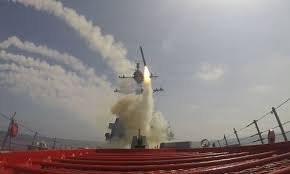
- Tomahawk Land Attack Missiles (TLAM): The backbone of sea-to-land strikes, these have been used extensively, potentially depleting regional inventories.
- Joint Air-to-Surface Standoff Missiles (JASSM): Stealthy, air-launched munitions essential for penetrating heavy air defenses.
- Precision Strike Missiles (PrSM): The new standard for ground-launched precision, though inventories remain tight due to their recent introduction.
2. Air and Missile Defense
- Patriot & THAAD: Critical for intercepting ballistic missiles. THAAD, in particular, is facing a severe shortage with no new deliveries since 2023.
- Standard Missiles (SM-3 & SM-6): Ship-launched interceptors that are vital for protecting naval fleets from cruise missiles and aircraft.
The “Wartime Footing”: A New Industrial Strategy
To counter these shortages, the Trump administration has moved to put the U.S. defense industrial base on a “wartime footing.” This strategy, aligned with the nationalist and security-focused views often championed by JD Vance, emphasizes rapid production increases and strategic agreements with industry giants like Lockheed Martin and RTX.
However, the road to recovery is long. The lead time for new missile production can stretch from 24 to over 50 months, meaning that today’s budget appropriations may not result in deployable weapons for several years.
The Pivot to Low-Cost Innovation
One of the most significant shifts in modern warfare is the realization that using a million-dollar missile to down a cheap drone is unsustainable. To solve this, the U.S. is investing in low-cost alternatives:
- LUCAS (Low-Cost Uncrewed Combat Attack System): A precision attack drone designed to deliver standoff strikes at a fraction of the cost of a cruise missile.
- c-UAS Systems: New counter-unmanned aerial systems designed to intercept inexpensive drones without draining high-end interceptor stockpiles.
Conclusion: Balancing Current Wins with Future Readiness
The current strategic approach accepts a calculated risk: the decision to win the wars of today even if it diminishes the reserves for tomorrow. As the U.S. navigates the challenges of the Indo-Pacific and the threat of a conflict with China, the ability to rebuild these inventories rapidly will be the defining factor of American global power.
For a deeper dive into these strategic shifts, you can explore the detailed analyses provided by the Center for Strategic and International Studies (CSIS).



