
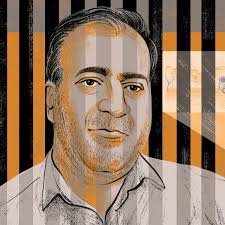
Jafar Panahi: A Filmmaker’s Courage Amidst Iranian Persecution
On a rainy winter afternoon in 2001, Mehdi Mahmoudian, a political dissident in Tehran, encountered a man with an amputated hand struggling to repair his car. Mahmoudian, then in his twenties and working at a nearby print shop, immediately recognized the man as a former guard who had tortured him in Towhid Prison two years prior. In a remarkable act of defiance and empathy, Mahmoudian chose to help his torturer. He invited the man into his shop, offered him tea, and enlisted a coworker to fix his vehicle. Hours later, as the man prepared to leave, Mahmoudian revealed his identity as a former prisoner. Stunned, the man departed without a word, but returned the following day to seek Mahmoudian’s forgiveness, claiming he was merely following orders and expressing regret.
This poignant encounter forms a striking parallel to the opening scene of “It Was Just an Accident,” a film co-written by Mahmoudian and the acclaimed Iranian director Jafar Panahi. The film depicts an auto mechanic, Vahid, recognizing his former torturer by the distinctive squeak of his prosthetic leg. Vahid then kidnaps the man, nicknamed Peg-Leg, in a white van, assembling a diverse group of former detainees from across Tehran to verify his identity. Remarkably, the feature was filmed covertly over twenty-eight days, primarily within the confines of the van.
A Bond Forged in Prison
Mahmoudian and Panahi’s collaboration began in the notorious Evin House of Detention in 2022, while both served prison sentences. Over seven months, they forged a friendship, with Mahmoudian even providing care for Panahi when he contracted COVID-19. Shortly before Panahi’s release, Mahmoudian whispered a plea to him: “Don’t forget the guys in prison.” Following his own release, Panahi invited Mahmoudian to co-write a script drawing on their shared experiences within Iran’s prison system.
“It Was Just an Accident” encapsulates the struggles of Iranians who have endured imprisonment, interrogation, and torture under the Islamic Republic. However, it also challenges viewers to empathize with their oppressors. The film’s nomination for an Oscar was bittersweet, as it coincided with Mahmoudian’s re-arrest on January 31st, following his signing of a joint statement blaming Iran’s Supreme Leader, Ayatollah Ali Khamenei, for the deaths and arrests of thousands of protesters.
Recent Arrest and Continued Struggle
Mahmoudian was released on bail on February 17th and spoke about his experiences. He expressed that his release brought little joy, given the continued imprisonment of thousands and the mourning of countless families. He described his arrest as a swift and forceful operation, highlighting the ongoing repression faced by political activists in Iran. He briefly connected during the U.S. and Israel bombing of Iran, stating he was unharmed before the signal was lost.
Mahmoudian emphasized that his past imprisonments were driven by a desire to prevent further bloodshed and to either dismantle or reform the Islamic Republic. He recounted the horrific conditions within Iranian prisons, detailing the physical and psychological torture inflicted upon inmates, including a harrowing account of a man whose eight-month-old baby was threatened with harm to force a confession.
A Shift in Resistance
He noted a shift in the recent protests, with a broader representation of ordinary citizens demanding systemic change, rather than specific political demands. This shift was reflected in the composition of prisoners, who were now largely individuals without prior political activism experience, driven by desperation and a sense of having nothing to lose.
The Power of Empathy and Forgiveness
Mahmoudian’s story, and his collaboration with Panahi, underscore the power of empathy and forgiveness even in the face of unimaginable cruelty. His decision to help his former torturer, and the film’s exploration of this theme, challenge conventional notions of justice and revenge. He recounted his own encounter with his torturer, where the man apologized, claiming he was simply following orders.
The film’s climactic scene, where former prisoners confront their torturer, was significantly shaped by Mahmoudian’s input, drawing on the real-life experiences of countless victims. He emphasized that the characters in the film are composites of individuals he has met, and their stories reflect the realities of torture and oppression in Iran.
A Hope for the Future
Despite the ongoing repression, Mahmoudian remains hopeful for a future where the Islamic Republic falls, not through foreign intervention, but through the power of the Iranian people. He expressed concern that any potential war could lead to further suffering and a repeat of the tragedies seen in Afghanistan. He believes the regime is nearing its end, resorting to extreme measures to maintain control.
This conversation was translated by Sheida Dayani.



