
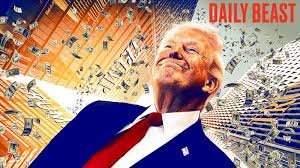
Is the MAGA Base Turning? Stephanie Ruhle Analyzes Trump’s Economic Legacy and the Rise of ‘Eat the Rich’ Sentiment
In a recent, hard-hitting discussion on The Daily Beast Podcast, renowned journalist and MSNBC anchor Stephanie Ruhle shed light on a growing phenomenon in American politics: the disillusionment of the very people who once formed the bedrock of Donald Trump’s support.
Ruhle argues that the current climate of antipathy toward the ultra-wealthy—often summarized by the phrase “Eat the Rich”—is no longer a sentiment exclusive to the Democratic party. Instead, it has evolved into a broader, non-partisan frustration felt by everyday Americans who believe the system is fundamentally broken.
The Disillusionment of the Original MAGA Voter
According to Stephanie Ruhle, the irony of the current political landscape is that many original MAGA voters are now the ones most likely to feel neglected. Trump initially won these voters by promising to be the champion of the “forgotten man,” claiming he could bring back jobs and restore prosperity.
However, Ruhle suggests that the reality has shifted. “I think it’s being led by Americans who are saying, ‘This country doesn’t work for me,’” Ruhle told host Joanna Coles. She posits that these voters are now reaching a breaking point where they are no longer loyal to a political affiliation, but are instead ready to “break the system” entirely.
The ‘Grift’ and the Accumulation of Wealth
A central point of Ruhle’s analysis is the perceived manipulation of power for personal gain. While the “Big Beautiful Bill”—legislation that lowered taxes for high earners and raised healthcare premiums—might be too complex for the average voter to dissect, the results are visible.
- n
- Family Wealth: According to the House Oversight Democrats’ Trump Family Corruption Tracker, the president and his family have allegedly made an estimated $2.5 billion through various digital schemes.
- Business Ventures: From World Liberty Financial to strategic stock acquisitions, Ruhle points to a pattern of “grift” that contrasts sharply with the economic struggles of the working class.
- Taxpayer Funds: Ruhle highlighted the attempted creation of a $1.8 billion slush fund intended to compensate political allies, a move that was eventually blocked by the courts.
Economic Fallout: From Global Conflict to Local Inflation
The economic strain isn’t just about wealth gaps; it’s about the cost of living. Ruhle connected the dots between foreign policy and the American wallet, specifically citing the conflict with Iran. The closure of the Strait of Hormuz—a critical artery for global oil supplies—has sent domestic gas prices skyrocketing to approximately $4.50 per gallon.
The data backs this up. The Bureau of Labor Statistics recently reported a 4.2 percent increase in the Consumer Price Index (CPI) for May, marking the highest inflation rate in three years. In a startling contrast to the public’s struggle, Trump reportedly responded to the inflation report by stating, “I love the inflation.”
The Cycle of Accountability
Stephanie Ruhle concludes that while economic struggle has historically plagued previous administrations—noting the difficulties faced by Joe Biden and Kamala Harris—the current situation is unique. She argues that the economic hardship many Americans are facing today is a direct result of the current administration’s specific policies.
As the gap between the “supreme wealth” of the political elite and the reality of the average citizen widens, the question remains: will this disillusionment translate into a seismic shift in the next election cycle?
For more in-depth political analysis and breaking news, stay tuned to MSNBC and the latest episodes of The Daily Beast Podcast.



