
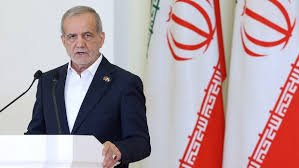
Ebrahim Raisi, the current President of Iran, has emerged as a significant figure in both domestic and international affairs. Elected in June 2021, his presidency marks a continuation of conservative policies and a firm stance on key geopolitical issues. This article provides a comprehensive overview of Raisi’s background, political career, policies, and recent developments surrounding his leadership.
Early Life and Career
Born in Mashhad, Iran, in 1960, Ebrahim Raisi’s early life was deeply rooted in religious studies. He began his theological education at a young age and quickly rose through the ranks of the clergy. His career within the Iranian judicial system began in the 1980s, and he held various positions of increasing responsibility, including Deputy Chief Justice. A controversial aspect of his past is his alleged involvement in the 1988 mass executions of political prisoners, a topic that continues to draw international scrutiny. For more information on this period, see Human Rights Watch’s report.
Ascension to the Presidency
Raisi’s path to the presidency was paved by his long-standing association with the conservative establishment in Iran. He previously ran for president in 2017 but lost to Hassan Rouhani. However, in 2021, with a carefully vetted field of candidates, he secured a landslide victory. His campaign focused on tackling corruption, economic revitalization, and strengthening Iran’s position on the global stage. The election was marked by low voter turnout, reflecting widespread disillusionment with the political system. Analysis of the election results can be found at Council on Foreign Relations.
Key Policies and Domestic Issues
As President, Raisi has prioritized several key policies. Economically, he has focused on alleviating the impact of international sanctions and promoting self-reliance. Socially, his administration has implemented stricter social controls, particularly regarding women’s rights and freedom of expression. These policies have led to increased protests and unrest within Iran. He has also emphasized the importance of supporting domestic industries and reducing reliance on foreign imports.
Foreign Policy and International Relations
Raisi’s foreign policy is characterized by a hardline stance towards the West, particularly the United States. He has been a vocal critic of the Joint Comprehensive Plan of Action (JCPOA), commonly known as the Iran nuclear deal, and has called for its renegotiation. Under his leadership, Iran has continued to expand its regional influence, supporting proxy groups in countries like Yemen, Syria, and Lebanon. Relations with Saudi Arabia have been strained, although recent diplomatic efforts have led to a thaw in tensions, brokered by China. You can find more details on Iran’s foreign policy at The U.S. Department of State website.
Recent Developments & Current Status
Recent months have seen continued economic challenges for Iran, coupled with ongoing social unrest. The government’s response to protests has been met with international condemnation. Furthermore, negotiations regarding the JCPOA remain stalled. The situation is constantly evolving, and Raisi’s leadership will continue to shape Iran’s trajectory in the years to come. As of May 19, 2024, reports indicate President Raisi and Foreign Minister Hossein Amir-Abdollahian were involved in a helicopter crash in East Azerbaijan province. The situation is still developing and details are emerging. BBC News is providing ongoing coverage.



