
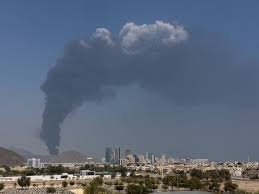
Iran War: UAE and Gulf Nations Under Attack as Conflict Escalates
Gulf countries are facing a relentless barrage of attacks from Iran as the United States and Israel pledge continued military action. The situation remains highly volatile, with regional stability increasingly threatened. This escalating conflict is sending shockwaves through global markets, particularly impacting energy prices.
Recent Attacks and Regional Impact
Kuwait, Bahrain, and the United Arab Emirates (UAE) recently experienced a surge in Iranian drone and missile strikes. Kuwait’s army reported intercepting projectiles in its airspace, while Qatar’s Ministry of Defence confirmed attacks involving 14 ballistic missiles and four drones originating from Iran. These attacks represent a significant escalation, expanding beyond US military assets to include civilian infrastructure.
Iran initiated these strikes in response to ongoing attacks by the US and Israel, which began on Saturday following an incident that, according to Iranian state media, resulted in at least 1,230 fatalities. The conflict has tragically claimed lives, with at least six US service members and 11 people in Israel, along with three in the UAE, falling victim to the attacks.
Economic Consequences and Energy Markets
The attacks are severely disrupting global energy markets. Tankers are becoming stranded near the Strait of Hormuz, a critical waterway for crude oil transportation. Approximately 20% of the world’s crude oil passes through this strait, making it a focal point of the conflict. Consequently, oil and gas prices have surged, reflecting the growing uncertainty and potential supply disruptions. You can find more information about the Strait of Hormuz’s strategic importance at The U.S. Energy Information Administration.
UAE Under Intense Pressure
The UAE has been particularly hard hit, with its air defense systems continuously engaged in intercepting drones, ballistic missiles, and cruise missiles over the past six days. Al Jazeera’s Laura Khan reported witnessing “air defence missiles lighting up the night sky in Abu Dhabi.” At least 131 drones and six ballistic missiles were reportedly launched towards the UAE earlier in the week.
Bahrain and Infrastructure Damage
In Bahrain, an Iranian missile strike targeted the country’s main oil refinery, Bapco Energies, sparking a fire that was quickly contained. Fortunately, no injuries were reported, and operations are continuing while damage assessments are underway.
International Response and Self-Defense
Arab Gulf leaders have strongly condemned Iran’s actions as a violation of international law. In a joint statement with the US, they reaffirmed their “right to self-defense” in the face of these attacks. The US has pledged to continue its military assault on Iran and has temporarily suspended services at some diplomatic missions in the region, including those in Saudi Arabia and the UAE. The US Department of State announced the suspension of operations at its embassy in Kuwait City on Thursday.
Looking Ahead
The situation remains incredibly fluid and unpredictable. Continued diplomatic efforts are crucial to de-escalate tensions and prevent further regional instability. The international community is closely monitoring the developments, seeking a peaceful resolution to this escalating conflict. For further updates and analysis, you can follow Al Jazeera.



