
Iran-Israel War: Live Updates on Escalating Conflict
Tensions in the Middle East continue to soar as the conflict between Iran and Israel escalates. Following US President Donald Trump’s demand for “unconditional surrender,” Iranian President Masoud Pezeshkian vowed that Iran will “never surrender,” while simultaneously signaling a potential de-escalation through diplomatic channels.
Recent Developments
- President Pezeshkian’s Address: The Iranian President pledged resistance but also stated that the leadership council has instructed the armed forces to halt strikes on neighboring countries unless provoked by attacks originating from those nations.
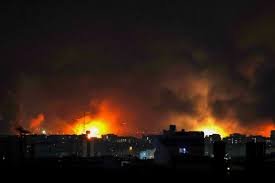
- Continued Strikes: Explosions were reported in Tehran, including dramatic footage of flames at Mehrabad Airport. The Israel Defense Forces (IDF) confirmed a “broad-scale wave of strikes” on Iran, utilizing over 80 fighter jets. Iran has also been launching retaliatory attacks, with interceptions occurring over the United Arab Emirates and Bahrain.
- Regional Impact: Gulf states, including Saudi Arabia and the UAE, are actively repelling retaliatory strikes as the conflict enters its second week.
- Honoring Fallen Service Members: A dignified transfer ceremony for the six US service members killed in the conflict will be held at Dover Air Force Base, Delaware, with expected attendance from President Trump and Vice President JD Vance.
Diplomatic Overtures and Apologies
In a surprising move, President Pezeshkian issued an apology to Arab Gulf nations for recent attacks originating from Iran. He emphasized that Tehran does not intend to attack its neighbors, referring to them as “brothers.” He further stated that the ruling council has directed the armed forces to refrain from attacking neighboring countries unless directly attacked from their territory.
“I think we need to solve this with diplomacy rather than fighting and having problems with neighboring countries,” Pezeshkian added, urging Gulf nations to avoid becoming “a plaything in the hands of imperialism.”
Ongoing Attacks and Regional Alerts
Despite the President’s address, interceptions of attacks continued over the United Arab Emirates, and sirens sounded in Bahrain. Qatar’s Defense Ministry confirmed intercepting a ballistic missile attack from Iran, declaring the threat neutralized. Security alerts were issued in Doha, Qatar, urging residents to remain indoors.
The conflict has disrupted regional airspace and triggered a surge in travelers attempting to leave the Middle East. Emirates briefly suspended operations at Dubai airport, one of the world’s busiest hubs, before resuming flights.
Israel’s Response and Damage Assessment
Israel has confirmed using over 80 fighter jets in its strikes, targeting military infrastructure, including the Imam Hossein military university and missile launch sites. Damage was reported at a sports center in south Tehran, with rooms covered in debris and equipment destroyed. A library and mosque were also reportedly “completely damaged.”
US Involvement and Gas Prices
The conflict has also impacted global markets, with gas prices spiking to an 11-month high. The US government, under President Trump, maintains its stance of not negotiating without Iran’s “UNCONDITIONAL SURRENDER.”
Casualty Reports
State media reports indicate that over 1,200 people have been killed in the first week of US-Israeli bombings in Iran. CNN’s Christiane Amanpour provides analysis on the potential trajectory of the war.
Regional Defense Efforts
Saudi Arabia intercepted and destroyed 20 drones targeting the Shaybah oil field, while the UAE intercepted nine ballistic missiles and 109 drones. Bahrain also reported intercepting 84 missiles and 147 drones since the conflict began.
Stay tuned for further updates as the situation develops.
Sources:



