
Illinois University Funding Overhaul: A Deep Dive into House Bill 1581
A significant shift in how Illinois funds its public universities is gaining momentum. House Bill 1581, dubbed the “Adequate and Equitable Public University Funding Act,” recently passed through a House committee and is poised for a potential vote by the full House. The bill seeks to overhaul the current funding model, but faces resistance, particularly from the University of Illinois System, the state’s flagship institution.
A Needs-Based Funding Formula
HB 1581 proposes a needs-based formula for distributing new funding, mirroring the Evidence-Based Funding model successfully implemented for K-12 education since 2018. The plan calls for a $135 million annual increase in university funding over the next 15 years. This new funding would be allocated based on an ‘adequacy target’ for each institution, prioritizing those furthest from reaching their target.
Rep. Carol Ammons (D-Urbana), the bill’s lead sponsor, emphasized that the legislation establishes a funding formula, with actual funding subject to annual legislative appropriations. “The purpose of this is to establish a funding formula that gives us a baseline that will allow us to build an adequate system for the future,” she stated. She highlighted that some institutions are currently receiving as little as 40-43% of their required state funding.
Historical Context and Funding Sources
This proposal stems from a commission established in 2021 to address systemic funding issues within the state university system. Many universities were financially strained by a two-year budget impasse from 2015 to 2017. Public universities typically rely on three primary revenue streams: state funding, student tuition and fees, and federal funding. While endowment funds exist, they are often restricted to specific purposes.
Historically, state funding was the largest contributor to university budgets. However, since the 1980s, states haven’t kept pace with rising higher education costs, leading to increased reliance on tuition and fees. According to the National Center for Education Statistics, this shift has disproportionately impacted regional universities.
Impact on Regional vs. Flagship Universities
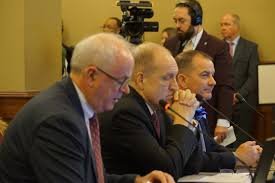
Jay Gatrell, President of Eastern Illinois University, argued that regional universities serve a higher proportion of low-income, first-generation, and underserved students. “For that reason, higher education funding like the K 12 model should account for these disparities,” he told the committee. Under the proposed formula, Eastern Illinois University and Western Illinois University would be identified as the most underfunded, receiving only 49% and 48% of their adequacy targets, respectively.
Conversely, the University of Illinois Urbana-Champaign, currently at 89% of its adequacy target, would receive the lowest priority for new funding.
University of Illinois System Opposition
Nicholas Jones, Executive Vice President of the University of Illinois System, voiced concerns that the bill unfairly redistributes resources. He argued that the U of I System, which enrolls 53% of all public university students in Illinois, is vital to the state’s workforce development, research enterprise, and economic competitiveness. “Equity and adequacy are shared goals, but the proposed equitable funding legislation does not achieve equity or adequacy,” he stated. “Instead, it redistributes resources in ways that under-resource the state’s strongest public universities.”
Next Steps
The bill passed the House committee by a vote of 12-4, meeting a deadline for committee passage. While further amendments are possible, Rep. Ammons anticipates no substantial changes before a potential vote by the full House. This legislation represents a critical juncture for the future of public higher education funding in Illinois.
This article is based on reporting by Peter Hancock of Capitol News Illinois.
Capitol News Illinois is a nonprofit, nonpartisan news service providing coverage of state government.



