Hungary’s ‘Operation Purgatory’: $20 Million in Hidden Cash Uncovered in Shocking Corruption Probe
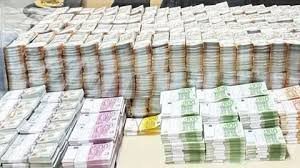
The Great Treasure Hunt: Millions Found in Hungarian Forests and Farms
In a turn of events that feels more like a political thriller than a government report, Hungarian authorities have uncovered nearly $20 million (approximately £14.8 million) in cash. This fortune wasn’t found in a bank vault, but hidden in secluded farm buildings and literally buried in the soil of forests across the country.
The discovery is a central piece of a sweeping investigation into Miklós Seszták, a former minister under the long-standing rule of Viktor Orbán. Seszták, who managed national development for four years, is now accused of accepting bribes through a complex scheme involving the state transport company.
The Breakdown of the Hidden Fortune
The National Asset Recovery and Protection Office (NVVH) detailed the staggering amounts of currency recovered during the two-day search:
- n
- 5,071,632,000 Hungarian Forints
- €2,658,350 Euros
- $1,257,100 US Dollars
All recovered funds have since been deposited into the Hungarian State Treasury, marking a symbolic victory for the current administration.
A New Era: PM Péter Magyar and ‘Operation Purgatory’
This crackdown is the cornerstone of Péter Magyar’s administration. After unseating Viktor Orbán in a landslide election this past April, Magyar campaigned on a promise of total transparency and a rigorous anti-corruption drive. He has officially dubbed this effort “Operation Purgatory”.
Following the recovery of the cash, Prime Minister Magyar described the findings as the beginning of the end for what he termed the “mafia” state. His government is actively working to dismantle the policies and power structures established during Orbán’s 16-year tenure.
The Shadow of the Orbán Administration
For years, the previous government faced severe criticism and allegations of cronyism. The European Union has previously characterized Hungary under Orbán as an “electoral autocracy,” citing the systemic awarding of lucrative government contracts to political allies.
The legal pressure is mounting for the former inner circle. Alongside Seszták, other high-profile figures—including former central bank chief Gyorgy Matolcsy—remain under arrest since September facing graft charges. While they all deny any wrongdoing, the evidence being unearthed is painting a stark picture of systemic corruption.
Political Revenge or Justice?
The turmoil extends beyond former ministers. Recently, Hungarian authorities detained Orbán’s brother and three others in connection with a people-smuggling case. Viktor Orbán has dismissed these legal actions as “political revenge,” claiming that the current administration is simply trying to eliminate political opposition to establish a one-party system.
As Hungary navigates this volatile transition, the world watches to see if “Operation Purgatory” will successfully cleanse the state’s institutions or if it will lead to further political polarization in the heart of Europe.
📰 You May Also Like