
Explosives Found Near Russian Gas Pipeline as Hungary Prepares for Elections
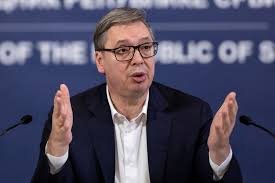
Serbia’s President Aleksandar Vucic announced on Sunday the discovery of two backpacks containing explosives near a pipeline carrying Russian gas, located close to the Hungarian border. This unsettling find occurs as Hungary gears up for a pivotal national election next weekend, adding another layer of complexity to an already tense political landscape.
Energy Dependence and Regional Concerns
Both Serbia and Hungary remain significantly reliant on Russian energy supplies, a position that diverges from other European nations actively seeking to reduce their dependence on Moscow. The discovery of the explosives, described as “two large packages of explosives with detonators” found in Kanjiza, northern Serbia, just a few hundred meters from the gas pipeline, raises serious concerns about energy security in the region.
Images circulating in Serbian media depict a substantial police presence, including roadblocks and aerial surveillance, indicating the gravity of the situation. President Vucic has reportedly informed Hungarian Prime Minister Viktor Orban about the initial findings of the investigation.
Political Ramifications and Accusations
Prime Minister Orban, currently engaged in a fiercely contested election campaign, has announced an emergency defense council meeting. The timing of this discovery is particularly sensitive, given the ongoing political battle. While authorities are investigating the origin of the explosives, initial clues remain undisclosed.
The incident has sparked a flurry of accusations. Some within Orban’s government have pointed fingers at Ukraine, drawing parallels to the 2022 attack on the Nord Stream pipelines. German prosecutors have issued arrest warrants for individuals allegedly involved in the Nord Stream sabotage, though Kyiv vehemently denies any involvement.
Ukraine, in turn, has suggested the possibility of a Russian “false-flag operation,” aiming to destabilize the region and influence the Hungarian elections. Ukrainian Foreign Ministry spokesperson Heorhii Tykhyi stated that Ukraine “categorically rejects attempts to falsely link Ukraine to the incident.”
Broader Geopolitical Context
This incident unfolds against a backdrop of complex geopolitical relationships. Both Vucic and Orban maintain strong ties with Moscow. Serbia recently secured a continued gas supply from Russia, while Orban has repeatedly criticized the EU for potentially disrupting Russian oil supplies to Hungary. He has also called for the suspension of EU sanctions on Russian energy imports, citing an impending “severe energy crisis.”
The accusations and counter-accusations highlight the deep-seated disagreements between Hungary and the European Union regarding relations with Russia, support for Ukraine, and immigration policies. Furthermore, Orban’s close relationship with former US President Donald Trump and recent expressions of support from US officials add another dimension to the situation.
Tight Election Race
Analysts suggest that Orban faces the most significant challenge to his 16-year rule in the upcoming elections. Recent polls indicate a narrowing gap between his ruling Fidesz party and the center-right Tisza party, with a substantial number of voters still undecided. The discovery of the explosives and the ensuing political fallout could significantly influence the outcome of the election. A visit from US Vice President JD Vance to Budapest is scheduled in the final week of the campaign, signaling continued US engagement with Hungary.



