
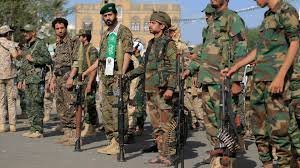
The Strategic Shift: Houthis Seize the Bab el-Mandeb Strait
The geopolitical landscape of the Middle East has just shifted dramatically. In a move that has sent shockwaves through global markets and diplomatic circles, the Houthis—Yemen’s formidable militia and a key ally of Iran—have successfully breached enemy defenses to seize control of the towns and islands surrounding the Bab el-Mandeb Strait.
This is not merely a local victory; it is a strategic masterstroke. The Bab el-Mandeb is one of the world’s most critical maritime choke points. With the Houthis now controlling this gateway, combined with Iran’s influence over the Strait of Hormuz, a staggering one-third of the world’s daily oil shipments are now under the shadow of the “Axis of Resistance.”
A Bitter Pill for U.S. Foreign Policy
For the United States, this advance represents a significant setback. Recent optimistic narratives suggested that Iran’s influence was waning and that the Houthis were on the brink of collapse. However, the reality on the ground has proven far different. The capture of the strait allows the Houthis to monitor and attack passing ships with unprecedented ease and lower costs.
Military experts, including those from the Washington Institute for Near East Policy, suggest that air strikes alone cannot solve this crisis. Without a coordinated ground force—which the U.S. is currently unwilling or unable to provide—missiles and bombs are unlikely to dislodge a group that is deeply entrenched and ideologically driven.
Saudi Arabia: A Crisis of Its Own Making
While the news is bad for Washington, it is catastrophic for Saudi Arabia. For years, Riyadh has struggled to contain the Houthi threat on its southern border. The recent breakthrough has not only expanded Houthi territory but has provided them with a windfall of abandoned Saudi and Emirati military equipment.
The failure of the Saudi-led coalition can be attributed to several critical factors:
- n
- Internal Disunity: Tensions between Saudi Arabia and the UAE led to a fragmented command structure and a lack of coordination between intelligence, drones, and ground forces.
- The “Mecca Alliance” Failure: The mutual-defense pact between Saudi Arabia, Pakistan, and Turkey has shown little efficacy, with allies showing reluctance to intervene in Houthi strikes.
- Ideological Gap: While the Houthi fighters are driven by a fierce ideological fervor, the opposing forces have often been characterized by divided loyalties and a lack of cohesion.
What Happens Next? The Road to Marib
With the momentum firmly on their side, the Houthis are now positioned to expand their influence further. The next likely target is the Marib province, a region vital for its oil reserves. By combining military force with strategic deals with regional tribal leaders, the Houthis could consolidate power across Yemen, further strengthening Iran’s grip on the region.
As noted by analysts at Chatham House, the lack of a unified strategy among Gulf states has created a power vacuum that the Houthis were more than ready to fill. In a conflict where discipline and focus outweigh raw firepower, the Houthis have emerged as the dominant force.
The Bottom Line: The world now faces a volatile reality where a non-state actor holds a “whip hand” over global energy security, leaving both Saudi Arabia and the United States scrambling for a solution in a region that refuses to be stabilized by air power alone.



