
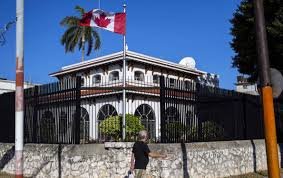
Havana Syndrome: A Growing Mystery and Diplomatic Fallout
Canadian foreign service officials and their families are expressing outrage over Ottawa’s recent statement regarding “Havana Syndrome,” a series of unexplained health incidents that have plagued diplomatic staff for years. Eight former diplomats spoke to Global News, detailing their ongoing struggles with symptoms like headaches, nosebleeds, and loss of consciousness, which began while stationed in Cuba in 2017. These diplomats, among over a dozen currently suing the federal government, continue to experience vision, balance, and cognitive issues.
A History of Dismissal and Disbelief
Many of these diplomats, speaking anonymously due to the ongoing lawsuit and fear of retribution, allege a pattern of dismissal and lack of support from Global Affairs Canada. “They have offered zero support from day one. They’ve tried to make us feel like we were crazy,” stated one former diplomat, referred to as Diplomat 1. Another, Diplomat 2, added, “There has been no monitoring of symptoms. There has been no follow-up regarding children.” The diplomats claim access to worker’s compensation and even salaries has been difficult to obtain.
Government Response and Contradictory Findings
Global Affairs Canada maintains its commitment to assisting affected staff, but the diplomats dismiss this as insincere. The government’s 2024 report concluded that “no definitive common cause could be identified” and that the incidents were “not the result of a malicious act of a foreign actor.” However, this stance is increasingly under scrutiny following recent revelations in the United States.
Leaders of America’s top intelligence and law enforcement agencies have testified to Congress that the U.S. intelligence community’s previous assessments on Havana Syndrome – which mirrored Canada’s conclusions – should be retracted due to “flawed” and biased intelligence. A new U.S. intelligence community review is currently underway. This follows reports of similar incidents occurring not only in Cuba but also in Russia and China.
The Search for a Cause
The Canadian government’s report suggests pre-existing medical conditions, environmental factors, and conventional illnesses as likely contributors to the symptoms. However, the diplomats strongly disagree, pointing to their diverse medical histories and the fact that they lived kilometers apart in Havana. “It’s undeniable that there was something going on, that there was some kind of weapon being aimed at us,” asserted Diplomat 3.
Interestingly, Cubans and other nationalities residing in the same neighbourhoods as the affected Canadian and American families did not report similar symptoms. Doctors, when consulted independently, often diagnosed symptoms resembling concussions, despite the absence of any physical trauma. “You can’t have a concussion without being hit in the head,” noted Diplomat 4, “But no one was hit, no one was struck, no one crashed into anything.”
A Culture of Silence and Potential Cover-Up
Diplomats report a culture within Global Affairs Canada that discourages reporting health issues, fearing negative career implications. “Incentives in the department are such that you don’t rock the boat,” explained Diplomat 6. The legal case against the government has been ongoing for seven years, with much of the material classified.
Recent congressional testimony in the U.S., including a 60 Minutes investigation, has alleged that the U.S. government was aware of – and had acquired and tested – a Russian-built covert device that produces microwaves, potentially responsible for the incidents. Diplomats who spoke with Global News believe Canada may have assisted the U.S. in a cover-up. “I think that Canada’s position was hitching behind the U.S. position, and they participated in the cover-up,” said Diplomat 7.
While cautious optimism exists that the U.S. revelations may pressure Global Affairs Canada to be more transparent, some diplomats remain skeptical. “I don’t think there’s ever going to come a point where they’re going to be honest about this unless they’re boxed up against the wall and they have no choice,” concluded Diplomat 8.
Stay informed: Global News provides ongoing coverage of this developing story.



