
A High-Stakes Gamble: Hamas Announces the End of its Gaza Governance
In a move that has sent ripples through the geopolitical landscape of the Middle East, Hamas announced on Monday its intention to dissolve its government in the Gaza Strip. This unexpected decision is viewed by many analysts not as a surrender, but as a calculated strategic maneuver designed to place immense pressure on Israel while the US-brokered ceasefire plan remains in a state of paralysis.
Ismail al-Thwabta, head of the Hamas Government Media Office (GMO), stated that the group is prepared to hand over administrative control to the National Committee for the Administration of Gaza (NCAG). This technocratic body was originally designed to lead the enclave under the terms of the proposed peace agreement.
The “Trump Factor” and the Geopolitical Chessboard
Why now? Experts suggest that Hamas is attempting to “talk over the head” of Israeli Prime Minister Benjamin Netanyahu by appealing directly to the influence of Donald Trump. With pressure mounting for the ceasefire plan to move forward, Hamas is positioning itself as the party willing to compromise on governance to facilitate the creation of “pilot areas” where Palestinians can live under the NCAG’s administration.
According to Muhammad Shehada, a Gaza expert at the European Council on Foreign Relations, this is a “savvy move.” By offering to relinquish administrative control from “A to Z,” Hamas aims to remove the primary excuse Israel uses to block the transition: the claim that Hamas refuses to leave power.
The Critical Gaps: Disarmament and Control
Despite the bold announcement, several critical obstacles remain that could render this move purely symbolic:
- n
- The Disarmament Dilemma: The Hamas statement notably omitted any mention of disarmament—a non-negotiable requirement for the second phase of the ceasefire deal.
- Military Reality: On the ground, Hamas security forces still maintain firm control over areas not currently occupied by the Israeli military.
- Israeli Sovereignty: Critics argue that as long as Israel maintains ultimate military control over the territory, the NCAG will be unable to exercise real authority.
A Stalled Peace: The Reality of the 20-Point Plan
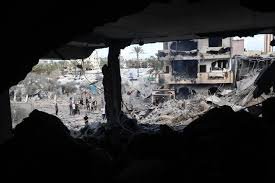
The current ceasefire plan, established in October, has largely failed to materialize. While the first phase called for an end to hostilities, the reality has been far different. According to reports from the World Health Organization and local health ministries, thousands have perished as strikes continue.
Furthermore, instead of withdrawing, the Israeli military has expanded its presence, aiming to occupy approximately 70% of the strip, leaving millions of displaced Palestinians in shrinking pockets of land. The promised international force to secure the region and allow the NCAG to enter has yet to be deployed.
What Happens Next?
The “Board of Peace,” tasked with advancing the agreement, has acknowledged the announcement but remains skeptical, demanding “actions, not promises.” For the NCAG to actually transition from Cairo to Gaza, a fundamental shift in the conditions on the ground is required.
Whether this move by Hamas will pave the way for a diplomatic breakthrough or simply serve as a temporary political shield remains to be seen. However, it underscores the desperate need for a functional administrative solution to prevent further humanitarian collapse in the region.



