
Gulf of Oman: A Region on Edge
The Middle East is experiencing a significant escalation in conflict, with recent events drawing international attention to the Gulf of Oman and Iran. This report provides context to the current developments, examining the history leading up to these critical moments and detailing the extent of the recent military actions.
Recent Military Strikes and Damage Assessment
Commercial satellite imagery is revealing the scale of damage inflicted upon Iranian military facilities. The initial phase of the campaign, a daytime attack, targeted Iranian leadership in central Tehran. Reports indicate smoke rising from the compound of Ayatollah Ali Khamenei following an attack that reportedly resulted in his death. Images captured by Airbus on Saturday showcase the aftermath of an Israeli strike on Iran’s Leadership House.
Israel and the U.S. have since expanded their operations, striking targets across Iran. Numerous military bases and compounds have reportedly been attacked, prompting a response from Iran throughout the Middle East. U.S. forces have specifically targeted Iran’s navy, with claims – though not fully confirmed by U.S. Central Command – of sinking nine Iranian naval vessels. Confirmation has been given that an Iranian warship was struck in port.
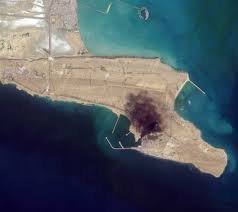
Satellite images depict burning vessels at the Konarak naval base in southern Iran, alongside damage to a nearby airbase where hardened aircraft hangers were hit with precision munitions. Extensive damage has also been reported at a drone base in the same area.
Regional Repercussions and Iranian Response
Iran has retaliated by launching drones and missiles towards Israel and U.S. military installations in Bahrain, Kuwait, and Qatar. While many drones have been intercepted, some have reportedly evaded defenses, causing damage in neighboring Gulf countries. Dubai, for example, reported debris from an Iranian drone damaging the iconic Burj Al Arab, as confirmed by a government statement.
Iran’s long-range missile capabilities represent a significant threat. The Iranian Revolutionary Guards have concealed these missiles within mountain tunnels. Recent strikes have reportedly targeted some of these tunnels in northern Iran.
Mourning and Future Outlook
Following the reported death of Ayatollah Ali Khamenei, Iran has declared 40 days of mourning. Satellite images show large gatherings of mourners in Tehran’s Enghelab Square. Iranian Foreign Ministry Spokesperson Esmail Baghaei has stated Iran’s commitment to continuing the fight against “foreign aggression, foreign domination.” A White House official indicated that President Trump plans to engage with Iran’s interim leadership “eventually,” but U.S. operations in the region will continue “unabated” for the time being.
Further Reading: For more in-depth analysis of the geopolitical landscape, consider exploring resources from The Council on Foreign Relations and The Brookings Institution.



