
Georgia’s Shifting Alliances: A US Partnership in Question
When leaving Tbilisi for the airport, travelers pass along George W Bush Avenue, a lasting reminder of a period when Georgia was a key partner for the United States in the South Caucasus. However, that era now feels distant. Georgia finds itself increasingly sidelined in US regional diplomacy, as Washington’s focus shifts towards Azerbaijan and Armenia.
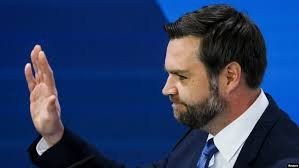
This shift was particularly evident during the recent launch of President Trump’s Board of Peace initiative. Invitations were extended to Azerbaijan and Armenia, hailed as “the most consequential bodies ever created,” while Georgia was notably absent. Now, with Vice President Vance’s upcoming visit to Baku and Yerevan – the highest-ranking US official to visit the region since Joe Biden in 2009 – Tbilisi can only observe from the sidelines.
A Growing Sense of Isolation
“Where do we stand today?” asks Georgian foreign policy analyst Giorgi Tumasyan. “Donald Trump created a peace council and invited almost every country in the region, except Georgia. Azerbaijan declares that transit will no longer pass through Georgia. Armenia also wants to open its border with Azerbaijan. Where is Georgia? On what platform? In what discussions? Whose allies are we, after all?”
Just two decades ago, Georgia was widely considered the most pro-Western democracy in the South Caucasus. Its strategic importance stemmed from its role as a crucial transit route for Caspian energy exports and as Armenia’s primary connection to the outside world, given its closed borders with Azerbaijan and Turkey. However, as Baku and Yerevan move closer through a US-backed peace process, Georgia’s role as an indispensable transit corridor is diminishing.
The Impact of Domestic Politics
The beginning of this drift can be traced back to 2012, with the rise to power of Georgian Dream. Western partners expressed concerns about democratic backsliding under the leadership of Bidzina Ivanishvili, a Russia-friendly billionaire widely considered the country’s most influential political figure. The 2024 election victory claimed by Georgian Dream was marred by allegations of vote-buying, intimidation, and violence, as reported by the Organization for Security and Cooperation in Europe (OSCE). The subsequent violent response to mass protests led to US sanctions in December 2024.
Deteriorating Relations with Washington
Relations with Washington further soured after the Trump administration took office. Outgoing US Ambassador to Tbilisi, Robin Dunnigan, revealed that Georgian Dream leadership sent a “threatening, insulting, unserious” letter to the White House, which was met with strong disapproval. She detailed efforts to reset relations, outlining simple conditions – including ceasing “anti-American rhetoric” – but these were met with further resistance.
The situation escalated with the emergence of the MEGOBARI Act, seeking increased scrutiny of the Georgian government’s actions and its ties to Russia and China. Ivanishvili’s refusal to meet with Secretary of State Marco Rubio to receive a response to the initial letter, citing US sanctions as “personal blackmail,” further strained relations.
A Pivot Eastward
Today, analysts suggest Tbilisi is gradually pivoting eastward, strengthening ties with China and Russia, in contrast to Azerbaijan and Armenia’s growing alignment with Washington. While some see Vance’s trip as a celebration of US success in mediating the Armenia-Azerbaijan conflict, others view it as a clear snub to Georgia.
“In a region like the Caucasus, even a small amount of attention from the US can make a significant impact,” says Joshua Kucera, a senior South Caucasus analyst at Crisis Group. “Both sides in Georgia’s sharply polarized politics have been hoping for Trump to weigh in with support for their side, but the White House so far has shown little interest in the country that used to be a close US partner.”
Georgian leaders have expressed a desire to “renew the strategic partnership from a clean slate,” but analysts believe more is needed, given Tbilisi’s eastward trajectory. The growing alignment with China, particularly regarding infrastructure projects like the Anaklia deep port, has been particularly damaging to Georgia’s standing in Washington.
Despite visa-free travel and a strategic partnership agreement, Beijing largely views Georgia as part of Russia’s sphere of influence. As for Moscow, its focus remains firmly fixed on the war in Ukraine. Some within Georgian Dream hope Russia might eventually reward loyalty by restoring Georgia’s territorial integrity, but this prospect appears increasingly unlikely.
Source: Radio Free Europe/Radio Liberty



