
The Fight for ‘Libertad’: Luis Manuel Otero Alcántara Arrives in Miami
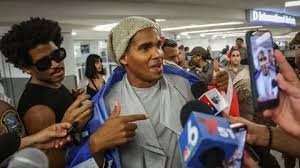
In a poignant scene at the Miami airport, Luis Manuel Otero Alcántara, one of Cuba’s most courageous voices for democracy, finally stepped onto American soil. After enduring a grueling five-year prison sentence in the maximum-security Guanajay facility near Havana, the 38-year-old leader of the San Isidro Movement (SIM) was greeted by a crowd of supporters singing the Cuban national anthem.
As he emerged, Otero Alcántara raised his hand in the shape of an ‘L’—the universal symbol for “Libertad” (Freedom)—signaling a victory not just for himself, but for the thousands of Cubans still fighting for basic human rights.
Art as Resistance: The San Isidro Movement
The San Isidro Movement is more than just a political group; it is a collective of artists, intellectuals, and journalists dedicated to fighting for freedom of speech in a country long dominated by a single-party system. Otero Alcántara’s journey to exile is a testament to the risks associated with dissent in Cuba.
Key points regarding the SIM struggle:
Rising Tensions: Washington vs. Havana
The release of Otero Alcántara comes amid a period of extreme diplomatic volatility. US Secretary of State Marco Rubio has described the Cuban government’s crackdown on its citizens as a reminder of the “misery and evil” inherent in the communist system, emphasizing that Otero Alcántara’s only crime was refusing to stay silent.
This friction is not limited to rhetoric. The relationship between the two nations has reached a boiling point due to several critical factors:
- Economic Pressure: The US oil blockade and stringent sanctions have exacerbated an internal fuel crisis, leading to widespread blackouts and severe food shortages across the island.
- Military Speculation: Recent reports from CBS News suggest the Pentagon has been reviewing military options in Cuba, although no official decision for intervention has been confirmed.
- Legal Battles: An unprecedented murder indictment against former leader Raúl Castro regarding the 1996 downing of aircraft has further strained ties, drawing condemnation from Russia and China.
The Human and Economic Cost
The geopolitical chess match between the US and Cuba has a real-world impact on the island’s economy. According to data from Onei, tourism—a vital lifeline for Cuba—has plummeted. In the first five months of 2026, fewer than 360,000 people visited, marking a staggering 60% decrease compared to the previous year.
As the US warns that a peaceful agreement remains unlikely, the plight of those still imprisoned, such as SIM member Maykel Castillo (“Osorbo”), continues to be a focal point for international human rights organizations like Human Rights Watch.
The story of Luis Manuel Otero Alcántara serves as a stark reminder of the enduring struggle for liberty in the Caribbean and the complex, often volatile, relationship between two neighboring powers.



