
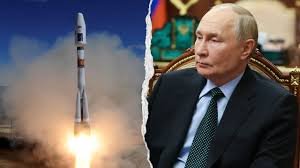
Russia’s Potential Space-Based Nuclear Weapon: A Growing Concern
The head of U.S. Space Command, Gen. Stephen N. Whiting, has expressed serious concerns regarding Russia’s potential development of a nuclear weapon designed to target satellites in space. This move, if realized, could have devastating consequences for global communications, GPS systems, and everyday life on Earth.
During an appearance on The General & The Journalist podcast, Gen. Whiting stated, “Russia remains a very historic and sophisticated space power. Yes, they have been hurt by economic sanctions, but they continue to invest in counter-space weapons, with the most concerning reports being that they are potentially thinking about placing on orbit a nuclear ASAT weapon.” He further emphasized that deploying such a weapon would violate the Outer Space Treaty, jeopardizing all satellites in low Earth orbit – an outcome the U.S. deems unacceptable.
The Outer Space Treaty and the Global Commons
Space is considered a global commons, governed by the 1967 Outer Space Treaty, signed by nearly every nation. This treaty prohibits claims of sovereignty in space, a principle that differs significantly from historical exploration where flags were planted to claim land. Gen. Whiting acknowledged the sensitivity surrounding intelligence sources but underscored the gravity of the situation, stating, “It’s a report that we’re very concerned about.”
Learn more about the Outer Space Treaty
Potential Consequences of a Nuclear Detonation in Space
A nuclear detonation in low Earth orbit (100-1,200 miles above Earth) could cripple the over 10,000 satellites currently in orbit, including the increasingly popular Starlink constellations. This would disrupt critical infrastructure reliant on satellite networks, including GPS, communications, financial systems, and global internet access. Many are unaware of how deeply modern life depends on these space-based systems. Even something as simple as using a smartphone relies on space technology multiple times a day.
Russia’s Strategic Considerations
Gen. Whiting suggests Russia may view space-based attacks as a means to counter U.S. and NATO’s conventional warfare advantages. From a Russian perspective, they perceive a conventional overmatch and believe neutralizing U.S. space capabilities could level the playing field.
Furthermore, reports indicate ongoing Russian activity targeting satellite systems, including widespread interference in Europe. This interference is already impacting civilian aviation, posing a significant risk to airliners and passengers. The normalization of such interference is a major concern.
Recent Developments and Concerns
President Vladimir Putin recently declared Russia’s nuclear triad development an “absolute priority,” raising further alarms. The U.S. is also closely monitoring joint Russia-China activities in the Arctic, with concerns they are not for peaceful purposes.
Stay up-to-date with the latest political news from Fox News
The situation remains fluid, and the U.S. Space Command is closely monitoring developments to ensure the safety and security of space-based assets.



