
Strategic Visibility: The US Military’s High-Stakes Game Near Cuba
In a calculated move of geopolitical signaling, the United States military has begun publicly broadcasting the coordinates of its surveillance flights near Cuba. By leaving flight transponders active on public tracking platforms, Washington is sending a loud and clear message to Havana: the US has “eyes in the sky” and intends to maintain the squeeze on the island’s communist leadership.
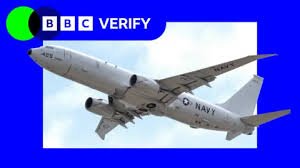
According to analysis by BBC Verify and data from Flightradar24, there has been a significant surge in activity in the Caribbean. Since May 11, at least five US Navy P-8A Poseidon surveillance aircraft and three MQ-4C Triton surveillance drones have been operating in the region, with some flights venturing as close as 50 miles (80km) from the Cuban coast.
Why the Visibility? The Psychology of Deterrence
Typically, military operations prioritize stealth. However, drone expert Dr. Steve Wright suggests that the decision to remain visible is deliberate. The goal is not just to gather intelligence, but to act as a psychological deterrent. This strategy is specifically designed to:
- n
- Enforce the Oil Blockade: Detering allies, particularly Venezuela, from attempting to breach the blockade to deliver energy shipments.
- Apply Political Pressure: Demonstrating a constant presence to destabilize the current regime’s sense of security.
- Monitor Shipments: Spotting arrivals from the south and north to ensure the blockade remains effective.
Rising Tensions and the “Fraudulent Case”
The deployment of the MQ-4C Triton near Cuba comes at a time of heightened volatility. Washington has recently imposed a strict oil blockade, contributing to severe fuel crises and widespread power blackouts across the island, which have in turn sparked public protests.
Adding to the friction, reports from Axios suggest that Havana may have acquired drones capable of reaching the US mainland. While Cuba’s foreign minister has denied desiring war and accused the US of building a “fraudulent case” for military intervention, the atmosphere remains tense. US Secretary of State Marco Rubio recently addressed the Cuban people, attributing the island’s hardships to its leadership rather than US sanctions.
Surveillance vs. Invasion: What the Data Tells Us
Despite the proximity of the flights, experts argue that this is not a precursor to an invasion. Mark Cancian, a senior adviser at the Center for Strategic and International Studies (CSIS), noted that the flight paths remain over water and do not cross into Cuban airspace.
“The recurrent flight paths indicate an intention to spot ship arrivals… None of the flights are over land, so this is not some preparation for invasion,” Cancian explained.
Comparing current data to February’s activity reveals a sharp increase in intelligence, surveillance, and reconnaissance (ISR) sorties. While February saw minimal Triton activity, the current wave of flights underscores a shift toward a more aggressive posture of deterrence and monitoring.
Conclusion: A New Era of Caribbean Monitoring
The use of the MQ-4C Triton and P-8A Poseidon represents more than just technical surveillance; it is a tool of diplomacy through intimidation. As the US continues to push for a “deal” with the Cuban regime, the visible presence of high-tech drones serves as a constant reminder of Washington’s reach and resolve in the Caribbean.



