
Escalation in the Middle East: The Complex Dynamics of the Iran War and the Struggle for the Strait of Hormuz
The geopolitical landscape of the Middle East has reached a fever pitch. What began as a strategic standoff has evolved into a volatile Iran war, characterized by naval clashes, aggressive sanctions, and a fragile diplomatic dance that could determine the stability of global energy markets for decades to come.
The Battle for the Strait of Hormuz: A Global Chokepoint
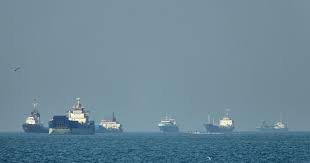
At the heart of the current crisis lies the Strait of Hormuz, one of the world’s most critical maritime arteries. Iranian officials have described control over this waterway as being as powerful as possessing an “atomic bomb,” given its ability to paralyze the global economy with a single decision.
Recent reports indicate a dangerous exchange of fire between U.S. Navy destroyers—including the USS Truxtun and USS Mason—and Iranian forces. While the U.S. military maintains that its actions are “self-defense strikes” against missile and drone launch sites, Iran claims the U.S. has “crossed the point of no return” by attacking Iranian ports and tankers.
Economic Warfare: Sanctions and Oil Spills
Beyond the kinetic warfare, the Iran war is being fought through financial attrition. The U.S. Treasury Department recently unleashed a new wave of sanctions targeting individuals and companies in China, Dubai, Hong Kong, and Belarus. These entities are accused of fueling Iran’s ballistic missile and drone programs, specifically the Shahed-series UAVs.
The environmental cost of this conflict is also becoming apparent. Satellite imagery has revealed a massive oil slick near Kharg Island, Iran’s primary crude export terminal. Experts estimate that approximately 80,000 barrels of oil have leaked into the Persian Gulf, posing a severe threat to marine habitats in the UAE, Qatar, and Saudi Arabia.
Regional Fallout: From ASEAN to the UAE
The ripple effects of the conflict are being felt far beyond the Middle East:
- ASEAN Response: Southeast Asian leaders have adopted emergency contingency plans to mitigate fuel price spikes, exploring regional power grids and the acceleration of electric vehicle (EV) adoption.
- UAE Defense: The United Arab Emirates has reported intercepting hundreds of Iranian ballistic missiles and drones, highlighting the precarious position of U.S. allies in the region.
The Lebanon-Israel Front and the Hezbollah Factor
The conflict is not limited to the Gulf. In southern Lebanon, the situation remains explosive. Despite a nominal ceasefire brokered by the U.S., Hezbollah and Israeli forces continue to exchange strikes. With over 1 million people displaced in Lebanon, the humanitarian crisis is mounting as the United Nations calls for maximum restraint to avoid a total regional collapse.
Is a Peace Deal Possible?
Despite the violence, a glimmer of diplomatic hope remains. Qatar continues to act as a vital mediator, with Qatari officials suggesting a “high probability” of a deal between Washington and Tehran. Secretary of State Marco Rubio has indicated that the U.S. is awaiting a serious response from Iran regarding a draft agreement to end the hostilities.
President Trump has maintained a dual approach: asserting that the ceasefire is still technically in effect while warning that the U.S. will act “more violently” if a deal is not signed quickly. The world now watches to see if diplomacy can prevail over the momentum of war.
Stay updated on the latest geopolitical shifts by following authoritative sources like the Reuters News agency for real-time Middle East reporting.



