
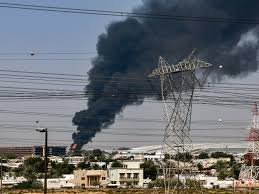
Recent events have dramatically escalated tensions in the Middle East, following a drone attack targeting Dubai International Airport. While responsibility is still being investigated, the incident has prompted strong reactions and a renewed focus on Iran’s foreign policy. Iranian Foreign Minister Abbas Araghchi has stated unequivocally that Tehran never sought a ceasefire with the United States and is prepared for a protracted conflict.
Iran’s Position: No Ceasefire, Prepared for Prolonged Conflict
Araghchi’s statement, delivered amidst heightened regional instability, signals a firm stance from Tehran. This declaration suggests a willingness to withstand continued pressure and potentially engage in a long-term struggle. Analysts suggest this position is rooted in a complex interplay of domestic political considerations and strategic objectives. The Iranian government views the current situation as a continuation of a long-standing conflict with the US and its allies, and believes a negotiated settlement is unlikely under current circumstances.
The attack on Dubai Airport, a major global transportation hub, is particularly concerning. It highlights the vulnerability of critical infrastructure in the region and raises fears of further escalation. The disruption caused by the attack has already impacted air travel and trade, demonstrating the potential for significant economic consequences.
Implications for Regional Stability
The situation poses a significant threat to regional stability. The United Arab Emirates, where Dubai is located, is a key US ally and a major economic power in the Gulf. An attack on its infrastructure is likely to be viewed as a direct challenge to both the UAE and the US. This could lead to a further escalation of tensions, potentially involving military action.
Furthermore, the incident could embolden other actors in the region to take provocative actions. The ongoing conflicts in Yemen and Syria, as well as the broader rivalry between Iran and Saudi Arabia, add further complexity to the situation. The potential for miscalculation and unintended consequences is high.
International Response and Potential Scenarios
The international community has largely condemned the attack on Dubai Airport. Calls for de-escalation and a return to diplomacy have been issued by various countries and organizations. However, the effectiveness of these calls remains uncertain, given Iran’s stated position.
Several scenarios are possible in the coming weeks and months. These range from a continuation of the current situation, with sporadic incidents of escalation, to a full-scale military conflict. The outcome will depend on a number of factors, including the actions of Iran, the US, and other regional actors. The role of international mediation will also be crucial. For more information on the geopolitical landscape, consider exploring resources from the Council on Foreign Relations.
The situation remains fluid and unpredictable. Continued monitoring and analysis are essential to understand the evolving dynamics and potential consequences of this escalating conflict. The attack on Dubai Airport serves as a stark reminder of the fragility of peace and security in the Middle East.



