
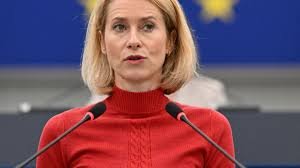
A Growing Divide: The Clash Between Israel and Kaja Kallas
The diplomatic landscape between Israel and the European Union has hit a significant turbulence. In a bold and contentious move, Israeli Foreign Minister Gideon Saar has announced the suspension of all contact with Kaja Kallas, the European Union’s foreign policy chief. This decision comes in the wake of reports suggesting Kallas compared Israel’s treatment of Palestinians to the former apartheid system of South Africa.
The controversy ignited following a report by the European news outlet Euractiv, which claimed that during high-level discussions with Mexican officials in May, Kallas drew parallels between the racial segregation of South Africa and Israel’s current policies in Gaza and the occupied West Bank.
The Reaction: “Blood Libel” and Diplomatic Severance
Foreign Minister Gideon Saar did not mince words regarding the allegations. Taking to X (formerly Twitter), Saar accused Kallas of a persistent and “obsessive” bias against the State of Israel. He described the reported remarks as a “blood libel,” arguing that the lack of a clear denial or retraction from Kallas left him with no alternative but to sever diplomatic ties.
In her public response, Kaja Kallas attempted to bridge the gap, emphasizing the deep bonds that tie the EU and Israel. While she did not explicitly address or deny the apartheid comparison, she stressed the importance of communication:
“Dialogue is the foundation of diplomacy, especially when differences arise,” Kallas stated, reiterating the EU’s support for a two-state solution and its opposition to illegal settlements in the West Bank.
Despite this diplomatic overture, Saar remained firm, stating that the response was insufficient because it failed to condemn the specific comparison to apartheid.
The Global Context: International Law and Human Rights
This diplomatic row does not exist in a vacuum. It reflects a broader, intensifying international scrutiny regarding the humanitarian situation in the Palestinian territories. Several high-authority bodies have raised alarms over the legal framework governing the region:
- n
- The United Nations: The Office of the UN High Commissioner for Human Rights previously concluded that Israel is violating international laws that prohibit racial segregation and apartheid.
- The ICJ: In a landmark advisory opinion in July 2024, the International Court of Justice (ICJ) declared Israel’s occupation of Palestinian territory unlawful.
- Resource Inequality: Reports highlight a dual legal system where settlers and Palestinians are treated differently regarding land access, water resources, and freedom of movement.
What This Means for EU-Israel Relations
The standoff between Gideon Saar and Kaja Kallas underscores the fragility of current diplomatic relations. As the EU continues to balance its strategic partnership with Israel against its commitment to international law and human rights, the role of the foreign policy chief will be critical in navigating these volatile waters.
Whether this freeze in communication is a temporary tactical move or a sign of a deeper systemic break remains to be seen, but one thing is clear: the rhetoric surrounding the conflict has reached a new level of intensity.



