
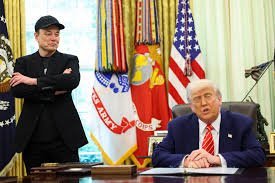
The Department of Government Efficiency: A Bold Leap Toward a Leaner US Government
In a move that has captured the attention of policymakers and the public alike, the concept of the Department of Government Efficiency (DOGE) has emerged as a cornerstone of a new approach to federal administration. Aimed at dismantling bureaucracy and eliminating wasteful spending, this initiative seeks to apply private-sector agility to the often-stagnant halls of government.
What is the Department of Government Efficiency?
The Department of Government Efficiency is not a traditional government agency but rather a strategic advisory initiative. Led by figures such as Elon Musk and Vivek Ramaswamy, its primary mission is to “dismantle government bureaucracy, slash excess regulations, and cut wasteful expenditures.”
The goal is simple yet ambitious: to make the federal government operate more like a lean startup than a bloated corporation. By identifying redundancies and outdated mandates, DOGE aims to save billions of taxpayer dollars.
Key Objectives of the DOGE Initiative
To achieve a true transformation, the initiative focuses on several critical pillars of reform:
- n
- Eliminating Waste: Identifying programs that no longer serve a purpose or have become inefficient over decades of operation.
- Deregulation: Reducing the complex web of regulations that often stifle business innovation and economic growth.
- Restructuring Bureaucracy: Streamlining the hierarchy of federal agencies to accelerate decision-making and execution.
- Accountability: Implementing strict performance metrics to ensure that government spending yields tangible results.
The Impact: Why This Matters Now
With the US national debt reaching historic levels, the push for a Department of Government Efficiency is more than just a political statement—it is an economic necessity. Applying the “First Principles” thinking—a method popularized by Elon Musk—allows the team to question every single line item in the federal budget, asking: “Is this absolutely necessary for the functioning of the state?”
Industry experts suggest that if successful, this model could serve as a blueprint for other nations struggling with oversized public sectors. For more information on how federal budgets are managed, you can visit the USAspending.gov portal to see where taxpayer money currently goes.
Challenges and Potential Hurdles
Despite the excitement, the path to efficiency is fraught with challenges. The US government is governed by a complex system of checks and balances. Any drastic cuts to federal spending or the removal of long-standing regulations will likely face:
- n
- Legal Battles: Lawsuits from affected agencies or interest groups.
- Legislative Resistance: Congressional pushback regarding budget allocations.
- Operational Risks: The danger of cutting essential services in the pursuit of lean operations.
Final Thoughts
The Department of Government Efficiency represents a paradigm shift in how the US views its own administration. Whether it becomes a permanent success or a temporary experiment, it signals a growing demand for transparency and efficiency in public service. As the world watches, the result could redefine the relationship between the citizen, the taxpayer, and the state.



