
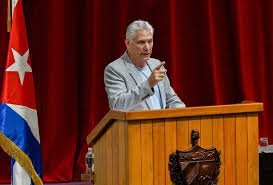
Escalation in the Caribbean: Cuba Warns of Dire Consequences Amid US Pressure
The diplomatic rift between Havana and Washington has reached a volatile peak. In a stark warning issued via social media, Cuban President Miguel Díaz-Canel asserted that any US military intervention on the island would lead to a “bloodbath with incalculable consequences.”
This alarming statement comes at a time when bilateral relations are among the lowest in decades, fueled by aggressive rhetoric and a series of punitive measures from the Trump administration. While Díaz-Canel maintains that Cuba poses no threat to the United States, he emphasizes the island’s “absolute and legitimate right to defend itself” against external aggression.
A Multidimensional Siege: Sanctions and Scarcity
The current crisis is not merely rhetorical; it is deeply economic. The US government has recently intensified its pressure through a wave of new sanctions targeting Cuba’s main intelligence agency and the Ministry of the Interior. Furthermore, the US State Department, led by Secretary of State Marco Rubio, has hinted that more sanctions are imminent.
The impact on the Cuban population has been immediate and severe:
- n
- Shipping Blockades: Major global carriers, including Hapag-Lloyd and CMA CGM, have ceased operations to and from Cuba to comply with new US regulations.
- Food Insecurity: With a collapsed agricultural sector, the halt in shipping threatens to exacerbate food scarcity on the island.
- Energy Collapse: A critical energy crisis is unfolding, with the exhaustion of Russian oil donations leading to widespread power outages.
The Political Chessboard: Trump vs. The Castro Legacy
President Donald Trump has been vocal about his vision for the region, describing Cuba as a “totally failed nation” and predicting the eventual collapse of the Castro regime. The tension has moved beyond economic warfare to potential legal warfare, with reports suggesting the US is preparing an indictment against former President Raúl Castro.
Despite the hostility, there are signs of clandestine diplomacy. The Director of the Central Intelligence Agency (CIA), John Ratcliffe, recently traveled to Havana for high-level meetings with Cuban intelligence services, suggesting that while the public rhetoric is fiery, back-channel communications remain active.
Preparing for the Worst: ‘Protect, Resist, Survive’
On the ground, the fear of imminent conflict is palpable. The Cuban government’s Civil Defense has begun circulating a family guide titled “Protect, Resist, Survive, and Prevail.” This manual instructs citizens on how to react to air raid sirens and recommends preparing emergency backpacks with non-perishable supplies.
As Foreign Minister Bruno Rodríguez claims that the US is building a “fraudulent case” to justify military action, the world watches closely. The intersection of economic collapse, political indictments, and military warnings has placed the Caribbean in a precarious position, where a single miscalculation could trigger the very disaster President Díaz-Canel fears.



