
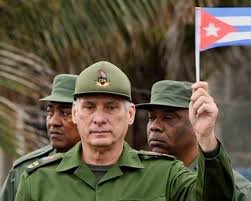
Cuban President Confirms US Talks Amidst Crippling Fuel Blockade
Amidst escalating hardship caused by a stringent US fuel blockade and widespread power outages, Cuban President Miguel Díaz-Canel confirmed on Friday that Cuban officials have engaged in discussions with the US government. The aim, according to Díaz-Canel, is to “find solutions to the bilateral differences” that have long plagued relations between the two nations.
Speaking in a prerecorded statement to senior Communist officials, Díaz-Canel emphasized the importance of dialogue in navigating the complex relationship. These differences are deeply rooted and well-documented. Figures like US Secretary of State Marco Rubio, a son of Cuban immigrants, have openly advocated for regime change in Havana, while former President Donald Trump recently reiterated calls for a “friendly takeover” – a statement he later walked back.
The Impact of the US Oil Blockade
Following the US military’s actions regarding Venezuelan President Nicolás Maduro, a key ally of Cuba, Trump implemented an executive order effectively imposing an oil blockade on the Caribbean island. Díaz-Canel revealed that Cuba has not received any fuel shipments for three months, exacerbating the already dire energy situation. This has led to growing public frustration, manifested in nightly protests where citizens bang pots and pans, and a student sit-in at Havana University.
“Whenever we have been in tense situations in relations with the United States, efforts have been made to find channels for dialogue,” Díaz-Canel stated, referencing previous talks with President Obama as a positive example. However, the current climate is markedly different.
A Signal of Unity: The Role of Raúl Guillermo Rodríguez Castro
The presence of Raúl Guillermo Rodríguez Castro, the 41-year-old grandson of former President Raúl Castro, during the statement and subsequent press conference, was particularly noteworthy. While Rodríguez Castro holds no official government position and was previously known as a businessman and his grandfather’s security chief, recent reports from Washington indicate he has been meeting with US officials, including during February’s Caricom meeting in Saint Kitts.
Carlos Alzugaray, Cuba’s former ambassador to the EU, believes this was a deliberate message of unity from the Cuban government. “It’s not the narrative that the US state department wants to project,” Alzugaray explained. “The US narrative suggests a panicked government negotiating its exit with the Castro family. This is demonstrably false. The president explicitly stated the talks were directed by Raúl Castro and himself.”
Prisoner Release and Potential for Progress
Prior to announcing the talks, Cuba announced it will release 51 prisoners in the coming days, as part of an agreement with the Vatican. The identities of those to be released remain undisclosed, but observers like Michael Bustamante, chair of Cuban and Cuban-American studies at the University of Miami, suggest the inclusion of prominent dissidents like Luís Manuel Otero Alcántara could signal a significant shift. However, Bustamante cautions that the terms of their release are crucial. “If they have a sword of Damocles over their heads, the release doesn’t truly resolve the issue.”
Currently, Prisoners Defenders estimates Cuba is holding 1,214 prisoners of conscience. The number of prisoners slated for release – 51 – is also fewer than the 53 freed during negotiations with the Obama administration in 2014.
A Diplomatic Misstep?
Bustamante also suggested Díaz-Canel may have erred in drawing parallels between the current talks and those held with President Obama, given the starkly different approach of the Trump administration.
As of now, the White House has not issued a response to Cuba’s statement. The situation remains fluid, and the outcome of these talks will have significant implications for the future of US-Cuba relations and the well-being of the Cuban people. For further information on US-Cuba relations, see the U.S. Department of State’s Cuba page.



