
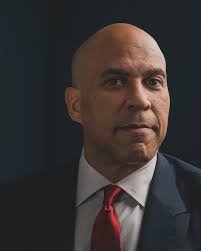
Cory Booker: Balancing Kindness and Strength on the Presidential Trail
A flicker of annoyance crosses Cory Booker’s face as the conversation turns to fighting. “Why do people continually mistake kindness for weakness?” he asks, directing the question at those who question his ability to win the presidency. For years, Booker has sought to demonstrate he’s resilient enough for today’s political climate—that a naturally affable New Jersey Democrat, who championed love in his 2020 campaign, could, if necessary, stand his ground.
From Stanford Football to the Senate Floor
To make his case, Booker revisits his days as a second-string tight end at Stanford University. He recounts a near-confrontation with Junior Seau, the NFL Hall of Famer, during a game against the University of Southern California. (A quick-thinking teammate intervened.) A coach once observed that Booker was “ferocious” between the whistles, but always helped opponents up afterward, a quality that, surprisingly, intimidated those who faced him.
Booker shares these stories to remind Democrats of the ambitious up-and-comer who became mayor of Newark, New Jersey. While declarations like “I love Donald Trump” garnered attention from theologians, they didn’t necessarily resonate with voters. He has criticized his party for not aggressively confronting the former president, even accusing fellow Senate Democrats of complicity during a debate over police funding.
A Record-Breaking Stand and a Renewed Focus
Most notably, Booker delivered a 25-hour-plus speech on the Senate floor, breaking Strom Thurmond’s record and showcasing remarkable endurance. This act, while symbolic, signaled a shift in Booker’s approach. He still embraces hugs, tells jokes, and offers inspirational quotes, but he’s determined to demonstrate an edge.
“You can believe in loving your neighbor and fight like hell,” Booker declared in South Carolina, adding for emphasis, “You could love your neighbor and punch somebody in the face.” This visit to an early-primary state, coupled with the upcoming release of his second book and a new policy agenda, suggests a serious preparation for another presidential run.
A Policy Agenda for the Working Class
Booker’s policy proposals aim to appeal to working-class voters, focusing on digestible, deliverable solutions. He proposes eliminating federal income taxes on earnings up to $75,000, drawing inspiration from Trump’s “no tax on tips” pledge. While early polls place him in the low single digits, Booker’s oratorical skills and storytelling ability consistently impress those who attend his events.
Doubts and a Quest for Authenticity
Despite his strengths, doubts persist. Some question whether Booker’s optimistic brand will resonate in 2028, as it didn’t in 2020. His friends and advisors wonder if his relentless hopefulness will be enough. However, Booker remains largely unchanged over the past three decades, a quality some see as both a strength and a weakness.
A Newark Legacy and a Path Forward
Booker’s early career in Newark shaped his political identity. He challenged the city’s entrenched machine, launching a hunger strike to protest drug dealing and living in a van to highlight blight and crime. These tactics, while sometimes criticized as attention-seeking, brought attention to important issues.
His years as mayor also taught him about political retribution, facing harsh criticism from then-Mayor Sharpe James. Despite the attacks, Booker remained committed to Newark, even after becoming mayor. He leveraged social media to connect with residents, responding to their needs and building a strong online presence.
The Senate and Beyond
Booker’s transition to the Senate wasn’t seamless. He initially struggled to stand out in the deliberative body, but he found his footing through legislative work, particularly on criminal justice reform with the First Step Act. He’s also become a key communicator for the Democratic caucus, advising colleagues on social media strategy.
Looking Ahead to 2028
As Booker considers another presidential run, he acknowledges the need to demonstrate strength and resilience. He’s learned from his 2020 experience and is determined to present a more forceful image. While he remains committed to his core values of love and unity, he’s prepared to fight for what he believes in. The question remains: can Cory Booker, the Senator of Love, become a viable presidential contender?
Source: The Atlantic



