
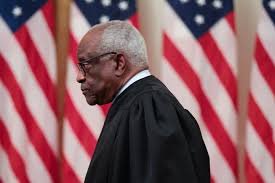
A Surprising Turn in the Alabama Redistricting Battle
In a move that has sent ripples through the legal and political landscape, Justice Clarence Thomas has dealt a significant blow to Alabama’s attempts to redraw its congressional maps. On Wednesday, Thomas refused to immediately issue a stay on a lower court’s decision to block the state’s redistricting plan, leaving the GOP’s strategy for the upcoming elections in a state of uncertainty.
While Justice Thomas has long been a critic of how the Voting Rights Act (VRA) is applied, his decision to deny immediate relief to Alabama officials adds a layer of complexity to a case that has been winding through the courts since 2021.
The Core of the Conflict: Race and Representation
The battle over Alabama’s congressional districts centers on allegations of intentional race-based discrimination. A federal three-judge panel recently issued a preliminary injunction against the state’s 2023 map, ruling that it unfairly diluted the voting power of Black citizens.
The judges were clear in their assessment, stating that Alabamians should not be forced to vote under a plan “tainted” by discrimination during the 2026 elections. As a result, the state may be required to use the court-ordered districts established for the 2024 election cycle.
Key Points of the Legal Dispute:
- The GOP Goal: Implement new maps to maintain control of the House of Representatives in the 2026 midterms.
- The Opposition: Attorneys for Black voters argue the new maps are designed to marginalize minority voices.
- The State’s Argument: Attorney General Steve Marshall contends that conservative representation is a reflection of democracy, not an attack on it.
Clarence Thomas’s “Colorblind” Philosophy
To understand the weight of this case, one must look at Justice Thomas’s long-standing judicial philosophy. For decades, Thomas has advocated for a “colorblind” interpretation of the Equal Protection Clause. He argues that the federal government should have minimal involvement in how states draw their district lines.
Thomas has consistently maintained that Section 2 of the Voting Rights Act should only govern access to the ballot and the counting of votes, rather than the actual drawing of district boundaries. In his view, requiring states to create majority-minority districts is a “disastrous misadventure” that contradicts the Constitution’s commitment to race neutrality.
What This Means for the 2026 Midterms
The timing of this legal hurdle is critical. With the 2026 midterms approaching, the U.S. Supreme Court‘s final decision will have a direct impact on the balance of power in the House of Representatives.
The Trump administration’s Solicitor General, D. John Sauer, has criticized the lower court’s interference, claiming it happened too late in the election calendar and based on “dubious merits.” However, with the current block in place, Alabama’s path to implementing its preferred map is now much steeper.
What’s Next?
The legal drama is far from over. Challengers to the map have until June 1st to provide the Supreme Court with their reasoning as to why the state’s map should remain blocked. Following this deadline, the Court will decide whether to grant Alabama’s appeal or let the lower court’s injunction stand.
As the nation watches, the Clarence Thomas Alabama redistricting case stands as a pivotal moment in the ongoing struggle between state legislative power and federal protections for voting rights.



