
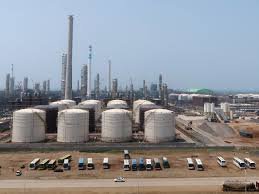
The Clash of Giants: China Blocks US Sanctions on Oil Refineries
In a bold move that underscores the growing tension between the world’s two largest economies, China has officially issued an injunction to block sanctions imposed by the United States. The dispute centers on five Chinese refineries accused of importing oil from Iran, sparking a heated debate over international law and national sovereignty.
The US Department of the Treasury recently targeted these firms, aiming to shut them out of the US financial system and penalize any entity conducting business with them. However, Beijing is not backing down.
Defending Sovereignty: China’s Legal Stand
China’s Ministry of Commerce has labeled the US measures as “improper,” arguing that they restrict legitimate business between Chinese enterprises and third-party countries. According to the Ministry, these unilateral sanctions are a direct violation of international law and the fundamental norms that govern global relations.
To counter the US pressure, the Ministry issued a strict “prohibition order,” stating that the sanctions shall not be recognized, enforced, or complied with within Chinese borders. This move is framed as a necessary step to safeguard China’s national security, sovereignty, and strategic development interests.
Who are the Targeted Refineries?
The US Treasury specifically called out Hengli Petrochemical (Dalian) Refinery, describing it as one of Tehran’s most valued customers, alleging that it generated hundreds of millions of dollars for the Iranian military. Along with Hengli, four other so-called “teapot” refineries were targeted:
- n
- Shandong Jincheng Petrochemical Group
- Hebei Xinhai Chemical Group
- Shouguang Luqing Petrochemical
- Shandong Shengxing Chemical
The Role of “Teapot” Refineries in China’s Energy Strategy
For those unfamiliar with the industry, “teapot” refineries are independent, smaller-scale facilities that operate outside the umbrella of state-owned giants like Sinopec. These refineries play a crucial role in China’s energy security by capitalizing on heavily discounted crude oil from countries facing international sanctions, such as Iran, Russia, and Venezuela.
Currently, these teapots account for roughly 25% of China’s total refinery capacity. While they operate on razor-thin margins, they are essential for maintaining a steady flow of oil into the country.
The Bigger Picture: Energy Dependence and Geopolitics
China’s reliance on the Middle East is profound, with over half of its oil imports originating from the region. Data from Kpler indicates that China purchased more than 80% of the oil shipped by Iran in 2025, highlighting the strategic importance of this trade route.
The US sanctions have created significant operational hurdles, particularly in labeling refined products. However, Beijing’s refusal to comply signals a shift toward a more assertive trade policy, prioritizing energy independence over alignment with US foreign policy.
As the geopolitical tug-of-war continues, the outcome of this standoff will likely shape the future of global energy trade and the effectiveness of unilateral sanctions in a multipolar world.



