
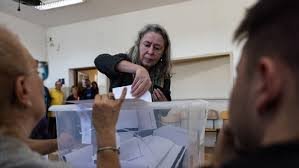
Bulgarian Election: A Nation Seeking Stability Amidst Political Turmoil
Bulgaria has once again returned to the polls, marking a staggering eighth election in just five years. For a nation that remains the poorest member of the European Union (EU), this cycle of political instability has left voters caught between deep exhaustion and a flickering hope for genuine systemic change.
The Battle for Bulgaria’s Soul: Radev vs. Borissov
At the heart of this electoral battle are two contrasting figures who represent different visions for the country’s future. The frontrunner, Roumen Radev, the 62-year-old former president, has positioned himself as the champion of the people against the “oligarchic model.”
Radev’s campaign centers on several key pillars:
- n
- Anti-Corruption: A promise to dismantle the corrupt structures that have plagued Bulgarian governance for decades.
- Pragmatic Diplomacy: While maintaining EU ties, Radev advocates for a more “pragmatic” relationship with Moscow, drawing criticism from those who fear a pivot toward Vladimir Putin.
- Sovereign Energy & Defence: Critical of EU energy policies and hesitant to fund weapons for Ukraine—aligning his views with those of Hungary and Slovakia—though he clarifies he will not veto Brussels’ decisions.
n
n
n
On the other side stands Boïko Borissov, the former Prime Minister and leader of the GERB party. Borissov, a seasoned political veteran, emphasizes a staunchly pro-European stance and unwavering support for Ukraine, dismissing Radev’s claim to be a “new man” in politics.
A Political Landscape Fractured by Corruption
Since 2021, Bulgaria has been gripped by a political crisis. Mass anti-corruption protests led to the fall of Borissov’s decade-long hold on power, giving way to a series of fragile and short-lived coalitions. The current atmosphere is one of desperation for a government that can actually govern.
However, the integrity of the democratic process itself is under fire. In the weeks leading up to the vote, police operations seized over one million euros intended for vote-buying. Hundreds of individuals, including mayors and municipal councillors, have been detained, highlighting the deep-rooted challenges the country faces in ensuring fair elections.
What the Numbers Tell Us
Early polling suggests a significant lead for Radev’s centre-left formation, Bulgaria Progressiste, with approximately 35% of voting intentions. Borissov’s GERB follows at around 20%, with the pro-European liberals of PP-DB holding the third position.
The path to power remains complex. For Radev to achieve his goal of a majority in the 240-seat parliament, he must navigate a minefield of potential allies. He has already ruled out coalitions with:
- The GERB party, due to fundamental disagreements over corruption.
- Parties representing Turkish and Roma minorities, specifically those linked to the sanctioned figure Delyan Peevski.
Conclusion: A Crossroads for the Balkans
As the exit polls arrive, the world watches to see if Bulgaria will finally break its cycle of instability. Whether the result leads to a pro-EU stronghold or a strategic shift toward Russia, one thing is clear: the Bulgarian people are yearning for a government that prioritizes transparency over oligarchy.
Stay tuned for more updates on the geopolitical shifts within the European Union and the results of this pivotal Bulgarian election.



