
Billion-Dollar Blueprints: Uncovering the Truth Behind White House Construction Contracts
For months, the narrative surrounding the current administration’s architectural ambitions has been one of generosity. President Trump has repeatedly assured the public that his grand vision for the White House—including a lavish ballroom—would not cost taxpayers “one dime,” claiming the projects are “gifts” funded entirely by private donors. However, a deeper dive into the actual government contract structures and spending reports suggests a much more complex and expensive reality.
An analysis reveals that the 18 major construction initiatives undertaken during this term carry a potential price tag exceeding $1 billion. While the rhetoric emphasizes private philanthropy, the financial trails often lead back to the public purse.
The Crown Jewel: The $400 Million East Wing Ballroom
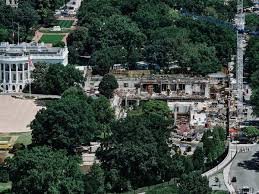
The most ambitious of these projects is the 90,000-square-foot ballroom in the East Wing. What started as a $200 million estimate has ballooned to $400 million. While the administration points to private donors via the Trust for the National Mall, the transparency is lacking. More concerningly, the Secret Service has confirmed that hundreds of millions of dollars in security upgrades tied to this project are being funded by taxpayers.
Controversial No-Bid Contracts and Budget Overruns
One of the most striking aspects of these renovations is the bypassing of traditional competitive bidding processes. In the world of public works, a competitive contract is the gold standard for ensuring value for money. Yet, several projects have ignored this:
- n
- Lincoln Memorial Reflecting Pool: Initially estimated at $1.8 million, the cost soared to over $16 million. The administration awarded two no-bid contracts to firms in Virginia and Ohio, citing an “urgent need” to finish by July 4th. The result? Peeling polyurethane and algae blooms.
- Lafayette Park: A project that the previous administration estimated at $3.3 million was handed to Clark Construction via a no-bid contract for $17.4 million.
Fortifying the Campus: Bunkers and Security Centres
Security is often the justification for spending, but the scale here is unprecedented. The administration has sought $400 million for security enhancements, including a “massive” military bunker beneath the new ballroom. While some funds were initially cut from spending bills, over $350 million has since been transferred from the Secret Service budget to cover these costs. This includes a new $180 million screening facility to replace temporary tents.
A Legacy Written in Gold and Stone
Beyond the massive structures, a series of smaller, high-luxury renovations have transformed the executive residence into something resembling a private resort:
- n
- The Triumphal Arch: A proposed 250-foot monument to celebrate American independence (and, by the President’s own admission, himself). While funding remains opaque, the National Endowment for the Humanities has already reserved $15 million for the project.
- Gilding Statues: Four overlooked statues near the National Mall are being covered in 23.75-karat gold leaf, funded by the Interior Department.
- The Rose Garden Club: A $2 million renovation that replaced greenery with stone tiles, mirroring the aesthetics of Mar-a-Lago.
The Bottom Line: Who Really Pays?
From the conversion of the Treaty Room into a guest suite to the gold-leafed Oval Office, the line between private gift and public expenditure has blurred. When a construction contract is signed without oversight or competitive bidding, the risk of waste increases. As these projects continue to expand, the American taxpayer appears to be the primary silent partner in this architectural spree.
For more information on how public funds are managed in large-scale infrastructure, you can visit the Government Accountability Office (GAO) to understand the standards of federal spending and auditing.



