
The Final Act of a Washington Power Broker
In the heart of the nation’s capital, politics rarely takes a break—even for a funeral. The passing of Senator Lindsey Graham wasn’t just a moment of mourning; it served as a final, high-stakes diplomatic stage. In his last political act, Graham managed to bring together the leaders of two of his most passionate causes: Israel and Ukraine, placing them once again before President Donald Trump.
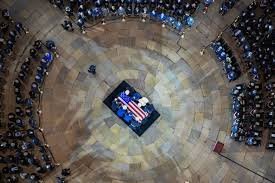
The ceremony at the Washington National Cathedral underscored Graham’s unique role as a ‘great convener.’ However, the event also highlighted a starker reality of modern American governance: Donald Trump remains the center of gravity in the political universe of the United States Capitol.
The Art of the Bridge: Graham’s Metamorphic Influence
Lindsey Graham possessed a rare ability to navigate contradictory ideological waters. He was a man who could champion neoconservative interventionism while simultaneously acting as a whisperer for the “America First” movement. This flexibility allowed him to enter Trump’s inner circle, granting him a level of access that few others enjoyed.
- The Connector: Graham served as a vital conduit between Republican senators, Democrats, and the presidency.
- The Mediator: Much like his mentor, Sen. John McCain, he built bridges where others saw only walls.
- The Influence: His willingness to defend Trump, even when others wouldn’t, allowed him to press the president on critical issues, such as the ongoing support for Ukraine.
A Tale of Two Leaders: Zelensky and Netanyahu
The presence of Ukrainian President Volodymyr Zelensky and Israeli Prime Minister Benjamin Netanyahu in Washington highlighted the conflicting missions currently facing US foreign policy. While both leaders are adept at navigating the tempestuous waters of DC politics, they arrived with opposing goals:
Volodymyr Zelensky is desperate for Trump’s assistance to bring an end to the war in Ukraine. Conversely, Benjamin Netanyahu seeks the president’s support to potentially escalate or restart military actions in the region.
Interestingly, the dynamics have shifted. Zelensky has recently seen a surge in positive press, partly due to unexpected support from MAGA influencers, while Netanyahu has faced a colder reception from some segments of the GOP, who question the wisdom of certain wartime strategies.
The Volatility of Modern US Foreign Policy
The interactions surrounding Graham’s farewell reflect a fundamental shift in how the U.S. Department of State and the White House operate. National interests are increasingly driven by the volatile personality of the president rather than conventional diplomatic doctrines.
From Trump’s contradictory remarks about Iranian bridges to the uncertainty surrounding the licensing of Patriot anti-missile interceptors for Ukraine, the message is clear: anything can happen at any moment.
A Legacy in Uncertain Hands
As the dust settles on the festivities and funerals of the capital, Lindsey Graham’s legacy remains in the fickle hands of his friend and golfing partner, Donald Trump. While eulogized as a “giant of the United States Senate,” the true measure of Graham’s impact will be whether the policies he championed—particularly regarding international security—survive the unpredictable currents of the Trump era.
In the end, Graham was the ultimate political fixer—the man who ensured that nothing of significance happened in the world without him having a view on it.



