
Benjamin Netanyahu: Is Israel Sabotaging Diplomacy with Iran?
The relationship between the United States and Israel has seen a solidification of strategy regarding Iran, focusing on crippling the nation’s oil exports to China. However, analysts are raising concerns that Israeli Prime Minister Benjamin Netanyahu may be actively undermining diplomatic efforts, potentially pushing for a military confrontation. This delicate situation unfolds amidst differing views on the ultimate goal of escalating tensions with Tehran.
A Strategy of ‘Maximum Pressure’
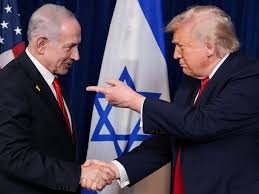
According to a recent report by Axios, President Trump and Prime Minister Netanyahu agreed during a White House meeting to intensify economic pressure on Iran. This strategy hinges on a recent executive order signed by Trump, authorizing a 25% tariff on any nation engaging in business with Iran – a direct challenge to China, which currently imports over 80% of Iranian crude oil.
Divergent Endgames: Trump vs. Netanyahu
While the tactics are aligned, the strategic objectives diverge. President Trump has indicated a willingness to negotiate, reportedly telling Netanyahu, “Let’s give it a shot.” However, Netanyahu has privately expressed skepticism about the possibility of a successful agreement, a position some analysts believe is deliberately intended to draw the US into a direct conflict with Iran.
Diplomatic Channels Remain Open – For Now
Despite the hawkish rhetoric, the Trump administration has maintained open lines of communication. Oman recently hosted indirect negotiations between Washington and Tehran, and President Trump announced plans for a second round of talks. US envoys Steve Witkoff and Jared Kushner are scheduled to meet Iranian officials in Geneva, Switzerland, to discuss a proposal that includes a suspension of uranium enrichment for three to five years and the removal of 450kg of highly enriched uranium.
Netanyahu’s Obstacles to Diplomacy
However, Netanyahu is reportedly pushing for the inclusion of conditions that are likely unacceptable to Tehran, such as limitations on its ballistic missile program and the severing of ties with regional allies. Mohannad Mustafa, an expert on Israeli affairs, told Al Jazeera Arabic that Israel’s insistence on these conditions is a calculated move to ensure the failure of diplomacy. “Israel knows Iran will not accept these conditions,” Mustafa stated. “By placing them, Israel is saying its only option is war. The current government has moved beyond using military force to achieve political settlements; war has become the goal itself.”
Exploiting Regional Tensions: The Palestinian Perspective
While the world focuses on the potential for a regional war, Palestinian leaders warn that Israel is exploiting these tensions to advance its agenda in the occupied West Bank and Gaza Strip. Mustafa Barghouti, general secretary of the Palestinian National Initiative, argues that the focus on Iran serves as a distraction from Israel’s accelerating annexation policies in the West Bank. Recent Israeli cabinet decisions have made it easier to seize Palestinian lands for illegal settlements, hindering the possibility of a two-state solution.
“The picture is clear,” Barghouti told Al Jazeera Arabic. “Israel wants to be the sole imperial power in the Middle East. They are using the pretext of the Iranian threat to drive the final nail into the coffin of the Oslo Accords, stripping the Palestinian Authority [PA] of powers even in Area A.”
Potential for Mass Expulsions and Annexation
Liqa Makki, a senior researcher at the Al Jazeera Centre for Studies, suggests that a US-Iran conflict could provide cover for mass expulsions of Palestinians. “If war breaks out, Israel will exploit the global distraction to execute what it dreams of but fears to announce: real annexation and population transfer,” Makki warned. “When the dust settles, the West Bank will look completely different.”
Far-Right Ambitions and Double Standards
Senior members of Netanyahu’s coalition, including Finance Minister Bezalel Smotrich and National Security Minister Itamar Ben-Gvir, have openly called for the “voluntary migration” of Palestinians and the re-establishment of settlements in Gaza. These ambitions are fueled by a rejection of Palestinian identity and a desire for complete Jewish control of the region.
The renewed focus on Iran’s nuclear program also highlights the double standards surrounding Israel’s own undeclared nuclear arsenal. Critics point out that Israel possesses approximately 200 nuclear warheads, yet faces no comparable scrutiny.
The Human Cost and Israel’s Objectives
Since October 2023, Israel’s military actions in Gaza have resulted in over 72,000 Palestinian deaths and widespread destruction. In the West Bank, hundreds more Palestinians have been killed, and over 40,000 displaced. Paul Davis, a professor at the Global Policy Institute, defends the US stance, arguing that Iran’s enrichment of uranium to 60% signals aggressive intent.
Ultimately, Mustafa concludes that Israel’s approach demonstrates a rejection of diplomacy in favor of reshaping the Middle East through force. “Israel is trying to cancel any possibility of reaching settlements on all fronts,” Mustafa said. “They want to topple the Iranian regime to change the face of the region, regardless of the economic or human cost.” Netanyahu views Iran as the “head of the octopus” coordinating a multi-front war of attrition through allies in Lebanon, Yemen, Iraq, and Syria. However, recent developments, such as the weakening of Hezbollah and the situation in Syria, have weakened Iran’s regional influence.



