
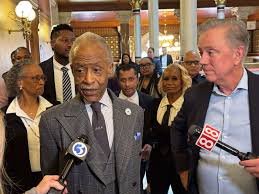
Reverend Al Sharpton is a name synonymous with civil rights activism, political commentary, and a powerful media presence. For decades, he has been a leading voice advocating for social justice and equality, often at the forefront of controversial issues. But who is Al Sharpton beyond the headlines? This article delves into his journey, exploring his early life, rise to prominence, and enduring influence on American society.
Early Life and Activism
Born Alfred Charles Sharpton Jr. in 1954 in Ohio, Sharpton’s upbringing was deeply rooted in the Pentecostal church. His mother, Ada Sharpton, played a pivotal role in his early development, fostering his passion for preaching and social activism. He began preaching at a young age and quickly became involved in the Civil Rights Movement, working alongside figures like Jesse Jackson.
Sharpton’s early activism was marked by a willingness to confront injustice head-on. He gained national attention in the 1980s for his involvement in several high-profile cases, including the Tawana Brawley case, which remains a controversial chapter in his career. While his methods were often criticized, his commitment to fighting for marginalized communities was unwavering.
Rise to Media Prominence
Sharpton’s transition into the media landscape was a natural extension of his activism. He launched his own radio show, “The Al Sharpton Show,” which quickly gained a loyal following. This platform allowed him to directly address issues affecting the African American community and engage in national debates.
In 2001, he launched PoliticsNation on MSNBC, becoming a prominent voice on cable news. His show tackles a wide range of topics, from racial injustice and political polarization to economic inequality and social issues. Sharpton’s ability to connect with audiences and offer a unique perspective has solidified his position as a leading political commentator. You can find more information about his show on the MSNBC website.
Controversies and Criticisms
Throughout his career, Sharpton has faced numerous controversies and criticisms. His involvement in the Tawana Brawley case, his rhetoric, and his past associations have been subject to scrutiny. Critics argue that his approach is often divisive and inflammatory. However, supporters maintain that his willingness to challenge the status quo is essential for progress.
It’s important to acknowledge the complexities of Sharpton’s legacy. He is a figure who evokes strong opinions, and his impact on American society is undeniable, regardless of one’s perspective. A detailed analysis of his controversies can be found on Britannica.
Enduring Influence and Legacy
Despite the controversies, Al Sharpton remains a powerful and influential figure. He continues to advocate for social justice, mentor young activists, and shape the national conversation. His National Action Network (NAN) continues to be a leading civil rights organization, working to address issues such as police brutality, voter suppression, and economic inequality.
Al Sharpton’s legacy is one of unwavering commitment to fighting for the marginalized and challenging injustice. He has evolved from a street activist to a media mogul, but his core values remain the same. His influence on American politics and culture is likely to be felt for generations to come. For more information about NAN, visit their official website: National Action Network.



