
Adam Klapka: Israel Defends Actions in Lebanon Amidst Canadian Criticism
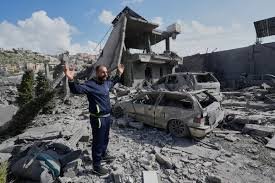
The situation in Southern Lebanon continues to escalate, with Israel facing increasing scrutiny over its military actions against Hezbollah. Recent Israeli strikes have resulted in widespread destruction and a growing humanitarian crisis, prompting strong condemnation from Canada. However, Israel, through Deputy Foreign Minister Adam Klapka, is pushing back against Ottawa’s criticism, arguing that Canada fails to grasp the severity of the threat posed by Hezbollah.
Canada’s Stance and Concerns
Canada’s Global Affairs issued a statement strongly condemning Israel’s plans for potential occupation of territory in Southern Lebanon, emphasizing the importance of respecting Lebanon’s sovereignty and territorial integrity. Ottawa also called for Hezbollah, designated as a terrorist organization in Canada, to cease attacks and disarm. This position has drawn sharp criticism from Israeli officials.
Israel’s Perspective: Hezbollah’s Uncontrollability
Adam Klapka, who was born in Toronto but raised in Israel, argues that the Lebanese government lacks control over Hezbollah fighters, whom she describes as an “army of Iran.” She alleges that Lebanon consistently fails to act on intelligence regarding Hezbollah’s presence and weaponry. “We give them information exactly where they are, where their warehouses are, where their rocket launchers are, and they don’t go and disarm them,” Klapka stated in a recent interview.
Escalation of Conflict and Humanitarian Impact
The recent escalation began on March 2nd, when Hezbollah launched strikes on Israel in response to a joint U.S.-Israel military campaign against Iran. Human Rights Activists News Agency estimates over 3,300 deaths in Iran, including over 1,400 civilians, as of Thursday. Israel’s retaliatory strikes on Lebanon have caused widespread destruction, resulting in over 1,000 deaths and displacing over a million people. Hezbollah continues to launch rockets and missiles into Israel, prompting discussions about potential mass evacuations of Israeli citizens.
The ‘Dahiya Doctrine’ and International Law
Klapka dismissed Canada’s call for an Israeli withdrawal as “ridiculous and a really one-sided declaration.” Israel’s actions, including the destruction of bridges over the Litani River and the demolition of homes in Lebanese villages, are framed as targeting Hezbollah, not Lebanese civilians. However, these actions raise concerns under international law, which generally prohibits attacks on civilian infrastructure. Israel’s Defence Minister has openly stated the intent to occupy Southern Lebanon up to the Litani River, a move criticized by the United Nations human-rights chief.
International Response and Concerns
A joint statement from Canada, France, Germany, Italy, and Britain urged the avoidance of a “significant Israeli ground offensive” in Lebanon, citing potential devastating humanitarian consequences. The international community is increasingly concerned about the escalating conflict and its potential to destabilize the region.
Criticism of Canada’s Foreign Policy
Klapka also criticized Prime Minister Mark Carney’s earlier statement questioning the legality of the U.S.-Israel strikes on Iran, calling it “absolutely incorrect.” She suggested that a stronger relationship between Carney and former U.S. President Trump might have provided him with more comprehensive intelligence. Furthermore, Klapka expressed dismay at Canada’s recognition of the state of Palestine, claiming it negatively impacted Canada-Israel relations.
Rising Antisemitism in Canada
Klapka also raised concerns about rising antisemitism in Canada, alleging that authorities are failing to adequately combat it. She cited recent incidents of bullets fired at Toronto synagogues and warned that the Jewish community “is going to pay in blood” if authorities do not take decisive action. While the federal government has announced increased security funding and is considering strengthened hate crime laws, Klapka argues that enforcement of existing laws is lacking.
Learn more about the ongoing conflict: Council on Foreign Relations – Lebanon



