Americans Flock to Quebec Archives Seeking Canadian Citizenship
A recent change in Canadian federal law is triggering a massive wave of Americans attempting to trace their Quebecois roots, hoping to secure Canadian citizenship. The Bibliothèque et Archives nationales du Québec (BAnQ) has been inundated with requests in recent months. In February alone, 1,500 requests for archival documents originated from the United States – a staggering 1,400% increase compared to the previous year.
“The timing, with the political climate in the United States, feels right. We were all very excited to see this door open to us,” explains Laura Mishra, an American resident of Raleigh, North Carolina. Despite never having lived in Canada, she has embarked on a journey to have Ottawa recognize her Canadian citizenship. A legislative change adopted by the federal government in December now allows anyone with a Canadian ancestor to become a citizen, a previously unavailable option.
A Surge in Demand at BAnQ
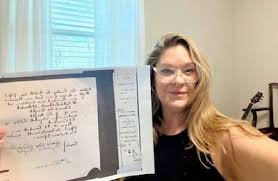
Since the law’s enactment, Mishra and countless others have been diligently searching for official documentation of their ancestors to support their applications. In Quebec, BAnQ has become the focal point of this search. “With the law, we knew there would likely be an influx of requests, but we didn’t anticipate this magnitude. We also expected a slowdown, but the requests continue to pour in,” says Hyacinthe Munger, an archivist at BAnQ.
Immigration lawyers, like Florence Beaulieu-Lavoie, are also experiencing a surge in inquiries. She reports receiving 60 requests since December, primarily from Americans concerned about the political landscape following Donald Trump’s return, seeking a “plan B.” “I wouldn’t say these are people currently planning to move to Canada, but they feel safer having an option,” she explains.
Motivations Beyond Politics
Laura Mishra, a vocal anti-Trump advocate, shares her story. Her grandfather was born in Saint-Lambert, Quebec, in 1915 before immigrating to the United States with his family in the 1930s. “My husband is an immigrant from India, and one of my children is part of the LGBTQ+ community,” she emphasizes, highlighting that these groups feel marginalized under the Trump administration. Her entire eligible family – including her mother, children, and grandchildren – intends to apply for Canadian citizenship.
“Even though I’ve lived my whole life in the United States, if there’s one place I’d want to move to in the world, Canada would be the right place for my family and me,” she asserts.
BAnQ Adapts to Increased Workload
Overwhelmed by the demand, BAnQ has adjusted its procedures. Americans now pay a fixed fee of $350 per request, a significant increase. This increase helps fund the hiring of additional staff dedicated to processing these requests. “We’re very aware of the processing delays. Research takes time, and each document must be stamped with the official seal and shipped,” explains Munger.
Millions Potentially Eligible
According to Claire-Marie Brisson, a professor of Francophone Studies at Harvard University, the number of Americans potentially eligible for citizenship could be in the millions. “If we include all descendants of Canadian ancestors, the potential pool of eligible individuals is considerable, likely in the millions,” she states, based on American census data and historical migration patterns.
“An estimated one million French Canadians migrated to the United States between 1840 and 1930,” she adds. Consequently, it’s no surprise that Quebec is experiencing a surge in requests from those tracing their ancestry. “The majority [of Canadian ancestors of Americans come from Quebec] without a doubt, looking at historical data. The large migratory wave towards New England and the Great Lakes primarily came from Quebec, particularly from the regions of Mauricie, Centre-du-Québec, Beauce, and Estrie.”
While the number of Americans researching their ancestry has increased dramatically, Ottawa hasn’t yet seen a significant rise in formal citizenship applications.
Have information related to this story? Contact us or call 1 800-63SCOOP.