Powerful Earthquake Rocks Indonesia: Latest Updates
A significant 7.4 magnitude earthquake struck Indonesia at 06:48 local time on Thursday (22:48 BST on Wednesday). The quake, initially reported as a 7.8 magnitude, originated in the Molucca Sea, a central location within the Indonesian archipelago, according to the US Geological Survey (USGS). While initial tsunami warnings have been lifted, the impact of the earthquake is still being assessed.
Initial Impact and Tsunami Warnings
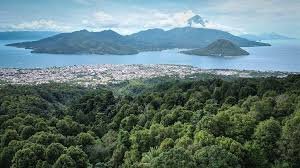
Authorities initially issued tsunami warnings for Indonesia, the Philippines, and Malaysia, but these have since been rescinded. Locals in cities across the archipelago reported experiencing intense shaking and widespread fear. The earthquake’s epicentre was approximately 120km (74.5 miles) from Ternate, a city with a population exceeding 205,000.
Damage Reports and Casualties
Early reports indicate damage to buildings and infrastructure. A sports complex and a hotel in Manado have sustained visible damage, with shattered glass and structural cracks. Tragically, one fatality has been confirmed – a 70-year-old woman crushed by debris in Minahasa regency, North Sulawesi. Another individual suffered a broken leg after jumping from a building in a panic. The full extent of the damage is still unfolding.
Eyewitness Accounts
Residents of Ternate and Manado described the terrifying experience. Budi Nurgianto, a Ternate resident, recounted feeling the walls of his home shaking for over a minute, prompting widespread panic. Saiful, also from Ternate, noted the tremors began gently but quickly escalated. In Manado, a driver named Fanli stopped his car to avoid falling trees and power lines.
Isvara Safitri, a journalist in central Manado, described the shaking as intense, even causing furniture to move and the roads to tremble. She also reported hearing a rumbling sound. Yayuk Oktiani, shopping in Bitung, described scenes of chaos and fear as people fled stores during a power outage. She rushed to her child’s school, which is near the coast.
Aftershocks and Ongoing Monitoring
Since the initial earthquake, two aftershocks with magnitudes of 5.5 and 5.2 have been recorded, and authorities anticipate further aftershocks. Residents are advised to avoid coastal areas and cliffs prone to landslides and to follow evacuation routes. Japan’s meteorological agency has also issued an alert for slight sea level changes along its coast, but no tsunami damage is expected.
Geological Context
The Molucca Sea is a region known for high seismic activity. This earthquake underscores the geological vulnerability of Indonesia, an archipelago situated within the Pacific Ring of Fire. Understanding the risks associated with earthquakes in this region is crucial for preparedness and mitigation efforts. You can learn more about the Pacific Ring of Fire at USGS – The Ring of Fire.
Stay tuned for further updates as the situation develops.