US Supreme Court Clears Path for 9/11 Mastermind’s Trial
In a decisive legal move, the United States Supreme Court has rejected an appeal filed by Khalid Sheikh Mohammed and two other alleged planners of the September 11, 2001, terrorist attacks. This ruling effectively removes a significant legal barrier, paving the way for Mohammed to face a military commission trial in 2028, where the death penalty remains a possible sentence.
The Legal Battle Over the Plea Agreement
The core of the dispute centered on a plea deal reached in 2024 between military prosecutors and the defendants. Under the terms of this agreement, which was initially approved by a military commission judge, the accused would have avoided the death penalty in exchange for life sentences.
However, the agreement was short-lived. Former Secretary of Defense Lloyd Austin intervened, revoking the deal and asserting his authority to do so. This led to a complex judicial tug-of-war:
- Military Courts: Initially argued that the Secretary of Defense lacked the authority to overturn the judge’s approved deal.
- Court of Appeals: The U.S. Court of Appeals for the D.C. Circuit later ruled in favor of the government.
- Supreme Court: The final appeal by the defendants was rejected, cementing the government’s position.
Who are the Accused?
The appeal involved three men currently detained at the U.S. naval base at Guantanamo Bay, Cuba, since 2006:
- Khalid Sheikh Mohammed: Accused of being the primary mastermind behind the attacks on the World Trade Center and the Pentagon.
- Mustafa Ahmed al-Hawsawi: Alleged to have provided financial support for the operations.
- Walid bin Attash: Alleged to have assisted in the planning and coordination of the attacks.
Delays and Controversies
The road to trial for Khalid Sheikh Mohammed has been notoriously long. One of the primary reasons for the delay has been the controversy surrounding evidence obtained through CIA-led enhanced interrogation techniques, which critics and legal experts have characterized as torture. The admissibility of this evidence has been a central point of contention for years.
While Ali Abdul Aziz Ali, another suspected conspirator, was also slated for trial, he did not participate in this specific appeal to the Supreme Court.
Final Verdict and Implications
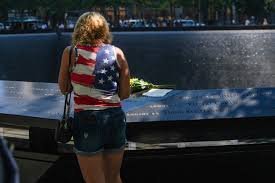
With this ruling, the U.S. government is now clear to proceed with the military commissions. For the families of the victims of the 9/11 attacks, this represents a step toward a long-awaited judicial conclusion. You can find more detailed historical archives regarding the events of 2001 at the 9/11 Memorial & Museum.