
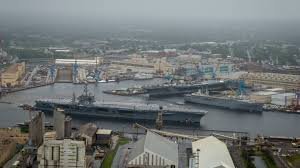
US Navy Shipyard Overhaul: A $200 Billion Reality Check
The backbone of American maritime power—the public shipyards—is in desperate need of a makeover. However, what started as a strategic upgrade is turning into a financial and temporal odyssey. A recent report from the Government Accountability Office (GAO) has sent shockwaves through the defense community, suggesting that the cost of reviving the US Navy infrastructure could be nearly ten times higher than originally planned.
What is the Shipyard Infrastructure Optimization Program (SIOP)?
Launched in 2018, the Shipyard Infrastructure Optimization Program (SIOP) is a massive initiative designed to modernize drydocks and essential equipment across four critical public shipyards located in Virginia, Maine, Washington, and Hawaii. These facilities are the lifeblood of the fleet, overseeing the complex repairs and maintenance of nuclear-powered aircraft carriers and submarines.
Initially, the vision was clear: a 20-year project with a budget of approximately $21 billion. But as the reality of aging infrastructure and economic shifts set in, that vision has shifted dramatically.
From $21 Billion to $200 Billion: Why the Explosion in Cost?
According to the GAO, the project could now stretch over 50 years and cost a staggering $200 billion. But how did the estimates deviate so wildly? Several critical factors are driving this surge:
- n
- Omitted Initial Costs: The original projections failed to account for key expenses.
- Economic Volatility: A sharp increase in commodity prices has driven up the cost of materials.
- Environmental Challenges: Significant seismic concerns at the Puget Sound Naval Shipyard require extensive retrofits and new construction to ensure safety and stability.
- Scope Creep: Since 2018, additional construction and repair projects have been folded into the SIOP, expanding the workload.
- Design Evolution: Lessons learned from ongoing projects have led to necessary, yet expensive, design changes.
For instance, dry-dock projects in Portsmouth and Pearl Harbor alone have seen costs jump by more than $2.5 billion since the initial funding request to Congress.
The Stakes: Fleet Readiness and Taxpayer Dollars
Despite the costs, the Navy argues that the upgrades are non-negotiable for national security. Once completed, officials predict a 10% improvement in aircraft carrier maintenance and a 15% boost for submarine maintenance. In practical terms, this could shave about three months off a submarine’s maintenance availability, which typically lasts between 25 to 36 months.
However, the GAO is sounding the alarm regarding oversight. Currently, the Navy is not mandated to provide a consolidated report on SIOP costs and risks to lawmakers. The GAO recommends that Congress mandate an annual, standardized report to prevent “consequential decisions based on incomplete information,” potentially risking billions in taxpayer funds.
The Political Horizon: A Fifth Shipyard?
As the struggle to modernize existing facilities continues, the political landscape is shifting. President Donald Trump has advocated for the creation of a fifth public shipyard to further bolster the readiness of the submarine and aircraft carrier fleets, adding another layer of complexity to the US Navy’s long-term infrastructure strategy.
Whether through the expansion of the SIOP or the creation of new facilities, one thing is certain: the cost of maintaining global maritime dominance is rising faster than anyone anticipated.



