
US-Iran Conflict Escalates: Airstrikes, Infrastructure Attacks, and the Battle for the Strait of Hormuz
The geopolitical landscape of the Middle East has entered a volatile new phase. Following the collapse of a fragile framework ceasefire, the United States and Iran have engaged in a series of intensifying military exchanges that threaten not only regional stability but the global economy. From targeted airstrikes to the strategic manipulation of critical shipping lanes, the stakes have never been higher.
The Human Cost and Targeted Airstrikes
The tension reached a breaking point after Iranian attacks in Jordan resulted in the deaths of two American service members, with one still missing. In a swift response, US Central Command (Centcom), under the direction of President Donald Trump, launched a wave of airstrikes aimed at “punishing” the Iranian Revolutionary Guard (IRGC).
These operations targeted several key locations within Iran, including:
- n
- Military Coastal Surveillance: Facilities designed to monitor the Gulf.
- Air Defence Systems: Sites meant to protect Iranian airspace.
- Missile and Drone Storage: Critical depots used for regional strikes.
- Strategic Ports: Explosions were reported in the port city of Bandar Abbas and near Qeshm Island.
The human toll is rising on both sides. To date, 16 US service members have been killed since the onset of the war, while Iran’s health ministry reports 50 deaths and over 500 injuries following US strikes over the last three weeks.
The Strategic Stranglehold: The Strait of Hormuz
One of the most critical flashpoints is the Strait of Hormuz, a narrow waterway through which a significant portion of the world’s oil flows. The IRGC has issued stern warnings to vessels, claiming that ships defying Iranian-mandated routes are facing “accidents.”
While the US urges mariners to utilize southern routes through Omani waters to ensure safety, Iran insists on a system of lanes closer to its own coast. This tug-of-war over maritime navigation is more than a territorial dispute; it is a tool for economic leverage. If Iran were to fully obstruct the strait, global energy prices would likely skyrocket, creating an economic shockwave felt worldwide.
War on Infrastructure: Targeting Water and Power
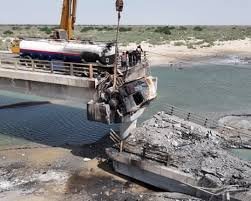
In a worrying shift toward asymmetric warfare, Iran has targeted civilian infrastructure in neighbouring Gulf states. Kuwait has been hit particularly hard, with Iranian missiles and drones striking power and water desalination plants.
For a nation like Kuwait, which relies on desalination for approximately 90% of its drinking water, these attacks are not just military maneuvers—they are direct threats to survival. Similar tensions have surfaced in Bahrain, where air defence systems have intercepted numerous Iranian drones, prompting residents to seek shelter as sirens echoed through the capital, Manama.
Nuclear Tensions and the Path Forward
The conflict is further complicated by the nuclear dimension. Iran’s Atomic Energy Organization has accused the US of attacking the under-construction Darkhovin nuclear power plant in Khuzestan province. While the US has not commented on this specific report, the objective remains clear: the US administration has reiterated its resolve to ensure Iran never acquires a nuclear weapon.
Analysts from the Center for Strategic and International Studies (CSIS) suggest that while the US possesses superior military power, Iran’s ability to inflict asymmetric damage—through drones, missiles, and regional allies like the Houthis in Yemen—makes a full-scale ground campaign a risky and unlikely venture.
Key Developments at a Glance:
| Location | Primary Event | Impact |
|---|---|---|
| Jordan | Iranian Attack | US troop casualties; airport evacuations. |
| Kuwait | Infrastructure Strike | Threats to drinking water and electricity. |
| Strait of Hormuz | Maritime Blockade Threats | Potential global oil price surge. |
As both nations move further away from diplomatic solutions, the world watches closely. For real-time updates on this evolving crisis, stay tuned to CNN and other leading global news outlets.



