
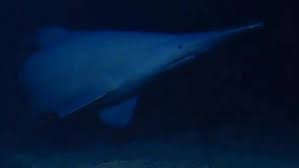
The Enigma of the Abyss: Exploring the Goblin Shark
The deep ocean remains one of the final frontiers of exploration on Earth, a realm of crushing pressure and eternal darkness. Among its most enigmatic inhabitants is the goblin shark (Mitsukurina owstoni), a creature that looks more like a prehistoric relic than a modern fish. Recent research, notably the Alan Jamieson goblin shark study, has shed new light on how these elusive predators survive and thrive in the bathypelagic zone.
For marine biologists, the goblin shark is a goldmine of evolutionary data. Its most striking feature—a protruding jaw that can launch forward to snatch prey—is a marvel of biological engineering. But beyond its appearance, the scientific community is eager to understand its distribution and ecological role.
Who is Alan Jamieson?
Alan Jamieson is a world-renowned deep-sea biologist known for his pioneering work in the Hadal zone (the deepest parts of the ocean). His approach to marine science combines cutting-edge technology with rigorous field observation, making his contributions to our understanding of deep-sea biodiversity invaluable.
By focusing on rare species like the goblin shark, Jamieson and his colleagues are not just cataloging animals; they are mapping the health of our oceans and the impact of human activity on environments we can barely reach.
Key Revelations from the Goblin Shark Study
The research led by experts like Jamieson provides critical insights into the biology and habitat of these sharks. Here are the most compelling takeaways from the study of these deep-sea wanderers:
- n
- Unique Hunting Mechanisms: The study highlights the shark’s specialized jaw protrusion, which allows it to capture fast-moving prey in an environment where food is scarce.
- Habitat Preferences: By analyzing specimen data, the research indicates that goblin sharks prefer specific temperature and pressure gradients, often residing between 100 and 1,300 meters deep.
- Low Metabolic Rates: To survive in the cold, nutrient-poor depths, these sharks have evolved a slow metabolism, allowing them to wait patiently for prey rather than hunting actively.
- Rare Sightings and Distribution: The study emphasizes the scarcity of these animals, suggesting that they are much rarer than previously thought, which increases their vulnerability.
Why This Research Matters for Conservation
Understanding the goblin shark is about more than just curiosity. The Alan Jamieson study underscores the fragility of the deep-sea ecosystem. As deep-sea mining and climate change begin to alter the chemistry of the ocean floor, species that are slow to grow and reproduce—like the goblin shark—are at extreme risk.
According to organizations like National Geographic, the deep ocean regulates the Earth’s climate. Protecting the creatures that live there is essential for maintaining the global ecological balance.
Final Thoughts: The Future of Deep-Sea Exploration
The findings from the Alan Jamieson goblin shark study serve as a reminder of how much we have yet to learn about our own planet. Every discovery in the deep sea challenges our understanding of biology and evolution.
As technology evolves, we can expect more breakthroughs that will help us protect these mysterious giants of the dark. The goblin shark is not just a curiosity; it is a sentinel of the deep, reminding us that the ocean’s mysteries are worth preserving.



