Under the Radar: How the ‘Parasite’ Method is Challenging Security in Global Ports
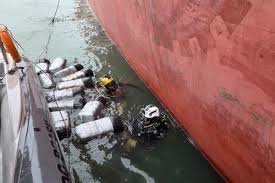
The Invisible War Beneath the Waves: Smuggling in Modern Ports
While customs agents and scanners focus on the containers stacked high on the docks, a more sinister operation is happening beneath the waterline. Criminal organizations have shifted their tactics, turning the structural vulnerabilities of massive vessels into hidden highways for narcotics. The target? Sea chests—small, submerged compartments that are becoming the new frontier for drug trafficking in international ports.
Recent data reveals a disturbing trend: the volume of drugs discovered in these underwater compartments has surged. In some regions, such as the Port of Santos, the amount of cocaine intercepted in sea chests has increased fivefold compared to previous years, signaling a sophisticated evolution in maritime crime.
What Exactly is a ‘Sea Chest’?
To the untrained eye, a ship’s hull is just a wall of steel. However, officials explain that a sea chest (or sea intake box) is a critical functional component. These structures are designed to intake saltwater for essential ship systems, such as engine cooling and firefighting.
Because these chests are embedded in the hull and located deep below the waterline—often around ten meters deep—they provide the perfect hiding spot. They are virtually invisible to traditional port inspections, which typically focus on cargo manifests and container seals.
The ‘Parasite’ Method: Precision and Risk
The United Nations Office on Drugs and Crime (UNODC) has previously identified this technique as the “parasite” method. This operation is not for amateurs; it requires a high level of logistics and technical skill.
- Professional Divers: Gangs hire expert divers to attach drug packages to the hull at the port of origin and retrieve them at the destination.
- The Physics of Smuggling: Since compressed cocaine is less dense than water and tends to float, traffickers use ballast—such as gym weight plates—to sink the packages into the sea chest.
- Stealth Operations: These attachments are often made without the knowledge of the ship’s crew, making the vessel an unwitting carrier.
The Battle at Porto de Santos
As the largest port in Latin America, the Port of Santos has become a primary battlefield. With dozens of ship maneuvers daily, inspecting every hull is a logistical nightmare. A single underwater inspection can take hours and requires shutting down the ship’s water intake pumps for diver safety.
To combat this, authorities are moving away from random checks and toward intelligence-led policing. By analyzing high-risk routes and destinations, the Federal Revenue, Federal Police, and Navy can concentrate their resources on the most likely targets.
The Future of Port Security: AI and Technology
The arms race between traffickers and law enforcement is now moving into the digital realm. To secure ports against the parasite method, new technologies are being deployed:
- AI-Powered Software: Artificial Intelligence is being used to identify patterns in shipping behavior that suggest illicit activity.
- Advanced Scanners: Implementation of high-penetration scanners to detect anomalies in ship structures.
- Electronic Deterrents: Shipping companies are exploring intrusion detection sensors and electronic proximity alarms to alert crews when unauthorized divers approach the hull.
Despite the complexity, the integration of specialized dive teams and advanced risk management continues to make the “parasite” method a high-risk gamble for criminal organizations.
📰 You May Also Like