
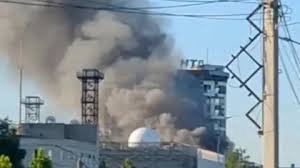
Strategic Escalation: Ukraine Hits Deep Inside Russian Territory
In a significant shift in military strategy, Ukrainian forces have launched a series of high-impact missile attacks deep within Russian borders. President Volodymyr Zelensky recently confirmed that the Ukrainian military targeted a critical military facility in Cheboksary, located in the Chuvash Republic. This strike is particularly notable as it occurred more than 900km (560 miles) away from the primary front line.
The operation utilized the FP-5 Flamingo cruise missiles, which successfully struck a plant responsible for producing essential components for drones and missiles used by the Russian army. While local officials in Cheboksary reported three injuries, the strategic blow to Russia’s military supply chain could be far more damaging than the immediate casualties suggest.
The Power of the FP-5 Flamingo Missile
The introduction of the FP-5 Flamingo into active combat marks a turning point in the conflict. This sophisticated weapon system boasts impressive specifications that place major Russian urban centres under threat:
- n
- Warhead Capacity: 1,150kg (2,535lbs) of high explosives.
- Operational Range: A reported range of up to 3,000km.
- Strategic Reach: This range puts Moscow and other key administrative hubs well within striking distance.
By developing these long-range capabilities, often with the support of Western allies, Kyiv aims to increase the logistical and economic costs of the invasion, potentially forcing the Kremlin toward a diplomatic settlement.
A Broad Offensive: Beyond Cheboksary
The strike in the Chuvash Republic was not an isolated event. Ukraine has intensified its efforts to dismantle Russian infrastructure through a multi-pronged approach:
- Maritime Strikes: Attacks were carried out on the occupied port of Mariupol on the Sea of Azov.
- Energy Infrastructure: A Russian oil refinery in Samara was targeted, alongside a “shadow fleet” oil tanker in the Black Sea.
- Drone Warfare: Ukraine continues to utilize drones against energy sites, which Kyiv classifies as legitimate targets to disrupt Moscow’s war machine.
The War of Attrition: Air Defence and Casualties
The conflict remains a brutal war of attrition, characterized by massive aerial exchanges. In a recent overnight clash, Russia’s military claimed to have intercepted 326 Ukrainian drones. Conversely, the Ukrainian air force reported downing 181 out of 207 Russian drones, though they admitted to 21 direct hits across 14 different locations. These exchanges have led to tragic losses, with at least two deaths and dozens of injuries reported in Ukrainian regions over the last 24 hours.
Diplomatic Deadlock and the Front Line
Despite the increased pressure from long-range strikes, the political landscape remains frozen. Russian President Vladimir Putin has consistently rejected proposals for face-to-face negotiations with President Zelensky. While the Kremlin maintains that Russian troops are advancing across the front, independent military analysts and evidence suggest that the front lines have remained virtually static for several months.
For more detailed updates on global security and conflict zones, you can follow reports from Reuters or the Al Jazeera news network.



