
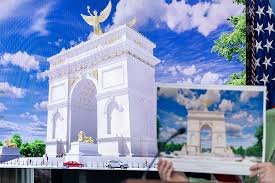
A Grand Vision for the Capital: The Proposed Triumphal Arch
Washington, D.C., is known for its iconic monuments and neoclassical architecture. However, a new and highly ambitious project is currently sparking intense debate: the proposed Triumphal Arch envisioned by U.S. President Donald Trump. This massive structure aims to redefine the city’s skyline, but it has already become a lightning rod for political and aesthetic criticism.
The Architectural Blueprint: Gold, Eagles, and Liberty
The proposed arch is not merely a gateway but a statement of national identity. According to the preliminary designs, the structure would stand at a staggering 250 feet tall. The vision includes several opulent details designed to evoke American pride:
- n
- The Pinnacle: A statue resembling Lady Liberty perched at the top.
- The Guardians: Two majestic eagles flanking the statue and four gilded lions guarding the base.
- Golden Inscriptions: The phrases “One Nation Under God” and “Liberty and Justice for All” engraved in gold on either side of the monument.
The project, led by architect Nicolas Charbonneau, received preliminary approval from the U.S. Commission of Fine Arts, though the approval came with significant caveats and questioning from commission members.
Controversies and Critiques: Size and Symbolism
While Interior Secretary Doug Burgum argues that the arch would transform a “barren” traffic circle on Columbia Island into a symbol of American freedom, critics are far from convinced. One of the primary concerns is the arch’s scale. At 250 feet, it would significantly tower over the 99-foot Lincoln Memorial, potentially obstructing views and disrupting the carefully planned harmony of the National Mall.
Beyond the height, the choice of imagery has raised eyebrows. Commissioner James McCrery pointed out the irony of using lions—animals not native to North America—as guardians of the site. There have also been suggestions to scale down the project to ensure it “better participates” in the existing skyline rather than dominating it.
A Part of a Larger Renovation Strategy
The Triumphal Arch is not an isolated project. It is part of a broader series of construction and reconstruction goals for Trump’s second term. Other controversial plans include:
- The Kennedy Center: Proposed renaming and extensive renovations.
- The White House East Wing: A plan to demolish existing structures to make room for a grand ballroom and a high-security underground bunker.
While the underground bunker has received some legal clearance for security reasons, the above-ground ballroom has faced stiff judicial pushback, highlighting the tension between presidential ambition and public/legal constraints.
Public Sentiment: Investment vs. Extravagance
As with any large-scale government project, the cost is a central point of contention. While supporters see the arch as a necessary addition to make Washington a peer to other great western capitals, opponents view it as a waste of taxpayer dollars. Many argue that funds would be better spent on healthcare and social services rather than on gilded monuments.
Whether the Triumphal Arch eventually becomes a permanent fixture of the D.C. landscape or remains a blueprint of ambition, it has already succeeded in igniting a conversation about the intersection of art, politics, and national identity in the 21st century.



