
Tornado Warning: The Fascinating Phenomenon of High-Elevation Twisters
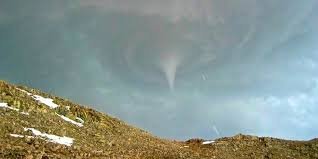
When most people hear a tornado warning, they picture the flat plains of the Midwest. However, nature often defies expectations. Recently, a confirmed tornado touched down in the mountains east of Fruit Heights, Utah, leaving the internet captivated by stunning footage of a twister spinning along a ridge line at an impressive 7,500 feet.
While the Utah event was visually striking, it serves as a gateway to a much rarer meteorological mystery: high-elevation tornadoes. These events are incredibly uncommon because mountainous terrain usually disrupts the atmospheric conditions necessary for a tornado to form. Even rarer is the ability to document them for official confirmation by the National Weather Service (NWS).
Why Are Mountain Tornadoes So Rare?
Tornadoes typically thrive in environments with strong wind shear and unstable air, often found in open plains. In the mountains, the rugged landscape creates friction and turbulence that usually tear apart developing rotations before they can reach the ground. When they do occur, they are often short-lived “landspouts” or small twisters that vanish as quickly as they appear.
The Hall of Fame: Highest-Elevation Tornadoes in US History
The Utah twister was impressive, but it doesn’t come close to the all-time records. Here are the most extreme high-altitude tornadoes documented in the United States:
- n
- The Absolute Record (12,600 ft): On May 29, 2021, a short-lived landspout touched down near the summit of Purple Mountain in Colorado’s West Elk Mountains. It traveled about 0.65 miles, marking the highest-elevation tornado ever confirmed.
- The Sequoia Sighting (12,156 ft): On July 7, 2004, a backpacker captured an F0 tornado near Rockwell Pass in California’s Sequoia National Park. This event proved that even the Sierra Nevada mountains aren’t immune to these swirls.
- Mount Blue Sky (11,900 ft): In July 2012, a brief tornado touched down on the eastern side of Mount Evans (now Mount Blue Sky) in Colorado. Because it occurred in a remote area with no damage, it remained unrated.
- Longs Peak (11,400 ft): Back in August 1984, a tornado was documented in Rocky Mountain National Park, Colorado, showcasing the long history of rare alpine weather events.
Recent Discoveries and the Power of Documentation
The challenge for meteorologists isn’t just the rarity of the event, but the location. Most of these twisters happen in wilderness areas where no one is watching. However, advancements in technology and the prevalence of smartphones have increased the chances of capturing these moments.
One of the most recent significant findings occurred on September 13, 2025, on the northern slopes of Sawtooth Mountain, Colorado. Identified via a swath of tree damage, this EF1 tornado reached peak winds of 88 mph at an elevation of approximately 11,300 feet. This event highlights the importance of ground surveys conducted by agencies like NOAA to understand extreme weather patterns.
Final Thoughts
Whether it’s a viral video from Utah or a historical record in Colorado, high-elevation tornadoes remind us that weather is unpredictable. While you may not need to worry about a tornado warning while hiking in the Rockies every day, these rare events provide invaluable data for scientists studying the intersection of topography and atmospheric physics.



