
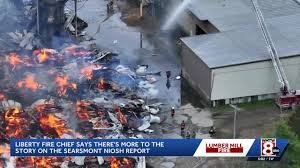
When a Rescue Mission Becomes a Ticking Time Bomb
For Liberty Fire Chief Bill Gillespie and his team, what started as a standard emergency response quickly transformed into a nightmare. Upon arriving at the Robbins Lumber Mill in Searsmont on May 15, the firefighters were unaware that they were stepping into a literal ticking time bomb.
The subsequent explosion didn’t just destroy property; it shattered lives and left a community mourning the loss of three individuals. This tragedy serves as a grim reminder of the invisible risks inherent in industrial firefighting and the critical importance of specialized training.
The Human Cost of the Explosion
The aftermath of the blast was devastating. The incident claimed the lives of those who ran toward the danger to save others, as well as a business owner:
- n
- Andrew Cross: A dedicated Morrill firefighter who was killed instantly at the scene.
- Wayne Woodbury: The Searsmont Assistant Fire Chief, who succumbed to his injuries a few weeks later.
- Alden Robbins: The co-owner of the mill, who passed away in early July due to complications from the blast.
The Science Behind the Blast: Why Water Made it Worse
According to a detailed report by the National Institute for Occupational Safety and Health (NIOSH), the disaster was caused by a fatal combination of unknown design and chemical reactions. The silo was specifically designed to limit oxygen to prevent combustion—a fact unknown to the responding crews.
Ironically, the very tool firefighters rely on most—water—became the trigger. The report indicates that applying water to the silo’s specific contents triggered the explosion. Without prior knowledge of the silo’s internal mechanics or its hazards, the firefighters were fighting a battle they didn’t know the rules of.
Risk vs. Reality: Chief Gillespie’s Perspective
Chief Bill Gillespie reflects on the narrow margin between life and death. “That’s two generations of my family that could have been wiped out had we been there 15 minutes sooner,” he shared, highlighting the constant gamble first responders take every day.
While some media headlines focused on the error of applying water, Gillespie emphasizes a deeper systemic issue: a lack of specialized training. He points out that the Searsmont crews had never been briefed on the oxygen-deprived design of that specific silo, nor had they received training on how to handle such a unique hazard.
Turning Tragedy into Training
The goal now is to ensure that no other crew walks into a similar ticking time bomb. The incident is being used as a primary training case study across the state to improve industrial response protocols.
Firefighters are traditionally trained to extinguish flames with water, but as this tragedy proves, industrial environments often require a more nuanced approach. By integrating guidelines from organizations like the National Fire Protection Association (NFPA), departments are working to better identify hazardous materials and structural risks before engaging.
The lesson is clear: In the face of industrial hazards, information is just as vital as equipment. Only through transparency and rigorous training can we protect those who risk everything to keep us safe.



