
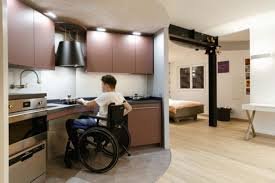
Beyond the Front Door: The Struggle for Accessible Housing in Mauricie
In the midst of a widespread housing shortage across Canada, the challenge of finding a place to call home is intensified for those with reduced mobility. In the Mauricie region, the gap between the demand for accessible housing and the actual available supply has reached a critical point.
According to David Maden, Director General of the Bureau d’aide et d’information sur le logement adapté – Mauricie (BAIL-Mauricie), the obstacles are not just about the number of available units, but the actual functionality of those spaces.
The Double Constraint: Availability vs. Accessibility
For most people, a housing shortage is a significant stressor. However, for individuals with limited mobility, this becomes a “double constraint.” It is not enough for a unit to be vacant; it must be physically reachable and usable.
- n
- Physical Barriers: Many buildings lack elevators, leaving units on higher floors completely inaccessible. Even at the entrance, a few steps without a ramp can render an entire building off-limits for wheelchair users.
- The “Ground Floor” Myth: A common misconception is that any ground-floor apartment is automatically accessible. As Maden points out, being on the first floor does not guarantee that the interior layout allows for autonomy.
- Functional Flow: The true measure of an adapted home is the ability of a person to move seamlessly “from the sidewalk to the bathroom.”
The Economic Hurdle and Regional Pressure
The crisis is particularly acute in Trois-Rivières, where essential services, healthcare, and adapted transportation are concentrated. This creates a magnetic effect, drawing people from surrounding municipalities, which further tightens the market.
Financial accessibility remains a massive barrier. With some 4 1/2 apartments reaching prices between $1,500 and $2,000, many individuals with limited income are priced out of the market. This is further complicated by an aging population that is also seeking accessible housing, increasing competition for the same limited pool of units.
Is There a Solution? Applying Existing Standards
The good news is that we don’t need to “reinvent the wheel.” The solutions already exist within building codes and urban regulations. The issue is a lack of prioritization during construction.
Key improvements requested by advocates include:
- Universal Ground Floors: Ensuring that all new buildings with six or more units have accessible ground-floor apartments.
- Smart Design: implementing wider hallways, accessible door frames, lower light switches, and walk-in showers.
- Consistent Enforcement: Stricter application of accessibility norms by city authorities.
How BAIL-Mauricie is Making a Difference
BAIL-Mauricie acts as a vital intermediary, helping tenants, landlords, and institutional partners find common ground. While they handle numerous active files, they emphasize that they are a support system rather than a guaranteed waiting list, reflecting the volatility of the private market.
Their services are provided free of charge, thanks to funding from the Société d’habitation du Québec (SHQ), although there is a strong call for this funding to be increased to better meet the growing regional demand.



