
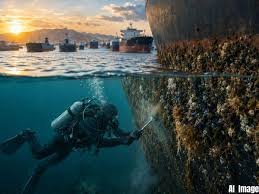
The Ghost Fleet of the Persian Gulf: An Environmental Time Bomb
The geopolitical tensions surrounding the Strait of Hormuz have led to a startling and overlooked crisis. While the world focuses on the political implications of the closure, a silent disaster is unfolding beneath the waves. Currently, nearly fifteen hundred stuck commercial vessels are idling in the Persian Gulf, creating what experts are calling a potential ecological catastrophe.
The Hidden Danger: Marine Biofouling
When commercial ships remain stationary for extended periods, they become floating islands for marine life. This process, known as biofouling, occurs when microorganisms, algae, and mollusks attach themselves to the ship’s hull. In the stagnant waters of the Persian Gulf, these idle vessels have become primary breeding grounds for marine invasive species.
This is not just an environmental concern; it is a massive economic burden. The build-up of these organisms increases hydrodynamic drag, which leads to:
- n
- Increased Fuel Consumption: Ships must burn significantly more fuel to move through the water once they resume travel.
- Higher Carbon Emissions: The inefficiency in fuel usage directly contributes to a larger carbon footprint for the shipping industry.
- Structural Damage: Certain invasive species can corrode or damage the protective coatings of the hull.
A Looming Bioinvasion Event
Scientists are sounding the alarm, warning that these stuck vessels could trigger a major bioinvasion event. When these ships eventually leave the Persian Gulf, they risk transporting non-native species to distant ecosystems, potentially devastating local biodiversity and disrupting fishing industries worldwide.
To combat this, marine biologists and environmental policy experts are urging the International Maritime Organization (IMO) and global governments to implement stricter regulations regarding hull maintenance and biofouling management for vessels trapped in conflict zones.
Why the Strait of Hormuz Matters
The Strait of Hormuz is one of the world’s most critical maritime chokepoints. Any disruption here doesn’t just stop the flow of oil; it freezes global logistics. The current situation with the Persian Gulf stuck commercial vessels highlights the fragile intersection between global security and environmental health.
As the international community seeks a diplomatic resolution to reopen the Strait, the clock is ticking for the marine environment. Without immediate intervention, the “ghost fleet” may leave behind a legacy of ecological destruction that lasts for decades.



