
A Hidden Shift: The Mystery of the 2011 Japan Earthquake
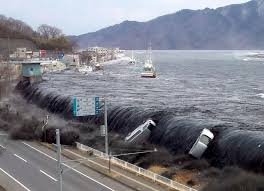
When the devastating 9.0 magnitude earthquake struck Japan on March 11, 2011, the world witnessed a catastrophe of epic proportions. However, beyond the immediate destruction and the subsequent tsunami, something extraordinary happened beneath the surface. Approximately 15 minutes after the initial shock, nearly the entire country experienced a subtle but permanent eastward shift.
While the movement was minute—roughly 5 to 6 millimeters—it represented a geological anomaly that had never been documented before. For years, this data was dismissed as a potential glitch, but new research led by geophysicist Sunyoung Park from the University of Chicago reveals a fascinating truth: the Earth’s core played a pivotal role in this movement.
The Journey of a Deep-Diving Seismic Wave
Most people think of earthquake energy as moving outward from the epicenter. However, this specific event involved a unique type of seismic wave that took a detour through the heart of our planet. According to the study, waves from the massive quake traveled deep into the Earth, bounced off the liquid metal of the outer core, and surged back up to the crust.
This “round-trip” journey, covering about 3,600 miles, took exactly 15 minutes. When these waves returned, they didn’t just shake the ground; they displaced four major tectonic plates simultaneously. This created a uniform shift across mainland Japan, stretching from Hokkaido to Kyushu—an area roughly 1,800 miles long.
Why This Discovery is a Game-Changer
Seismologists were already aware that waves could bounce off the core, but they previously believed the energy dissipated before it could affect the surface. This discovery proves that under the right conditions, a seismic wave can retain enough power to move entire landmasses.
- Broad Impact: Unlike typical earthquake ruptures, which are localized, this event was the broadest ever recorded.
- Energy Release: The movement released energy equivalent to a magnitude 7.5 earthquake, though it was spread across a vast area, making it feel less intense.
- Predictability: Because the travel time to the core and back is consistent, this phenomenon could potentially be anticipated, unlike unpredictable aftershocks.
Redefining Our Understanding of Tectonic Plates
The shift involved the complex intersections of the Pacific, Okhotsk, Philippine Sea, and Eurasian plates. Experts suggest that the initial powerful shaking may have “primed” the faults, making it easier for the returning wave from the core to trigger widespread movement.
Goran Ekstrom of Columbia University notes that while the primary slip of the plates caused the tsunami and a 20-centimeter shift in Honshu, the core-visiting wave added a second, broader layer of displacement. This suggests that large earthquakes continue to influence fault systems in unexpected ways long after the main rupture has ended.
Looking Ahead: Seismic Hazards and Monitoring
The ability to detect such a precise movement is a testament to Japan’s sophisticated satellite and seismic monitoring networks. However, researchers warn that similar events could be happening in other parts of the world where monitoring is less advanced. For more information on how these movements are tracked, you can explore the U.S. Geological Survey (USGS) resources on global seismicity.
As geophysicist Amanda Thomas from UC Davis points out, this discovery provides a crucial new piece of the puzzle in understanding how faults work. By recognizing these “echoes” from the core, scientists can better evaluate seismic hazards and improve preparation for future global events.



