
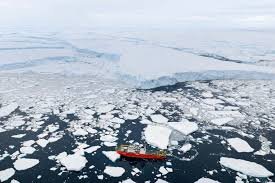
The Doomsday Clock Ticks: Is the Thwaites Ice Shelf on the Verge of Collapse?
In the frozen expanse of Antarctica, a silent but catastrophic transformation is unfolding. The Thwaites glacier, infamously known as the “Doomsday Glacier,” is showing alarming signs of instability. Recent data suggests that its floating ice shelf—the critical barrier holding back massive amounts of inland ice—is detaching, with potentially devastating consequences for coastlines worldwide.
What is the Thwaites Eastern Ice Shelf (TEIS)?
To understand the danger, one must first understand the role of an ice shelf. Think of it as a massive, floating cork in a bottle. The Thwaites Eastern Ice Shelf (TEIS) spans approximately 1,500 square kilometres—roughly the size of Greater London—and reaches depths of 350 metres.
Its primary function is buttressing: it acts as a physical brace that slows the flow of the glacier from the Antarctic continent into the ocean. When this brace fails, the glacier behind it accelerates, dumping ice into the sea at a much faster rate.
Warning Signs: A ‘Shattering Windscreen’
Scientists are observing a dramatic breakdown of the TEIS. According to Christian Wild of the University of Innsbruck, the ice is not just melting; it is disintegrating. He describes the phenomenon as looking like a “windscreen that’s shattering.”
- n
- Increased Flow Rates: Between January 2020 and January 2026, the flow rate of the ice shelf tripled, exceeding 2,000 metres per year.
- Structural Fractures: Massive gashes and rifts are opening up along the grounding line—the point where the glacier leaves the seabed and begins to float.
- Loss of Stability: Changes in ocean circulation have thinned the ice, leaving it weak and prone to tearing as it slams into pinning points on the ocean floor.
The Global Domino Effect: Why This Matters
The collapse of a single ice shelf might seem isolated, but the Thwaites glacier is the size of Great Britain. It already accounts for 4% of current global sea-level rise. If it were to collapse entirely, it could trigger a domino effect across the West Antarctic ice sheet.
The stakes are incredibly high: glaciologists warn that such a collapse could eventually lead to a calamitous sea-level rise of 3.3 metres, permanently altering the geography of every coastal city on Earth. While this is a slowly unfolding crisis rather than an overnight event, the trajectory is clear.
A Broader Trend of Polar Destabilization
The situation at Thwaites is not an anomaly. Since the 1990s, there has been a systemic trend of ice shelf destabilization across Antarctica. The nearby Pine Island glacier is experiencing similar rapid disintegration. As noted by experts at the British Antarctic Survey, these structures only remain stable in extreme cold. As our oceans and atmosphere warm, these vital buffers simply cannot survive.
By 2067, estimates suggest Thwaites could lose approximately 190 gigatonnes of ice per year—a 30% increase from current levels. This underscores the urgent need for global climate action to mitigate the warming of polar waters.
For more detailed scientific data on ice sheet dynamics, you can explore the latest research provided by NASA’s Climate division.



