
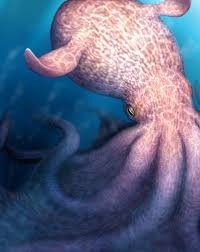
The Cretaceous Kraken: Unveiling the 60-Foot Giant Octopus That Ruled the Ancient Seas
When we imagine the Mesozoic era, our minds usually drift toward the thunderous footsteps of dinosaurs or the terrifying jaws of mosasaurs. However, the prehistoric oceans held a secret far more elusive and equally terrifying. Enter Nanaimoteuthis haggarti, a prehistoric giant octopus that earned the nickname the “Cretaceous Kraken.”
Recent paleontological discoveries have revealed that this ancient cephalopod wasn’t just a passive inhabitant of the deep—it was an apex predator that rivaled the most feared marine reptiles of its time.
A Titan of the Deep: How Big Was the Cretaceous Kraken?
For years, the record for the largest invertebrate was held by the giant squid. But N. haggarti has rewritten the history books. Based on the analysis of fossilized beaks, researchers estimate that this giant octopus could reach staggering lengths of 60 feet.
- n
- Size Comparison: Longer than a standard city bus.
- Scale: Nearly 20 feet longer than the largest known giant squid.
- Era: It dominated the oceans between 100 and 72 million years ago.
This massive size suggests that the “age of vertebrates” in the sea wasn’t as absolute as previously thought; spineless cephalopods were fighting for the crown of the ocean.
The Science Behind the Discovery: Digital Fossil Mining
Because octopuses are soft-bodied creatures, they rarely leave complete skeletons. The only hard part of their anatomy that survives the millions of years is their parrot-like beak, composed of chitin (the same material found in crab shells).
To uncover these hidden giants, a team led by Yasuhiro Iba from Hokkaido University utilized a cutting-edge technique called digital fossil mining. By employing AI-assisted software, researchers were able to peer inside sediment samples from Japan and Vancouver Island, detecting 3D digital fossils that traditional excavation would have missed.
Apex Predator: A Bone-Crushing Diet
What did a 60-foot giant octopus eat? The evidence is written in the wear and tear of their beaks. Paleontologists found significant chipping and scratching on the fossilized jaws, suggesting that N. haggarti didn’t just eat soft fish.
The evidence points to a diet of:
- Tough-shelled ammonites: Crushing through protective armor.
- Large bony fish: Utilizing powerful, flexible arms to restrain prey.
- Marine reptiles: It is hypothesized that they may have even bitten through the bones of mosasaurs.
A Scientific Debate: Reality or Hyperbole?
Not every scientist is fully convinced by the 60-foot estimate. Christian Klug, a paleontologist from the Natural History Museum at the University of Zürich, suggests these dimensions might be “extreme.” Since researchers only have the beaks to work with, there is a margin of uncertainty.
However, regardless of whether it was 40 or 60 feet, most experts agree that Nanaimoteuthis haggarti sat at the very top of the cephalopod food chain, acting as a formidable predator in the Late Cretaceous ecosystem.
What Else Lurks in the Deep?
The discovery of the Cretaceous Kraken reminds us how little we know about the prehistoric abyss. Since these fossils were found in relatively shallow deposits, paleontologists are now wondering: What was living in the deepest parts of the ocean?
The ocean has always been a place of mystery, and as technology advances, we may soon find that the legends of the Kraken were rooted in a very real, very giant biological reality.



