
The Battle for the Sand: Public Access vs. Private Rights on Florida’s Gulf Coast
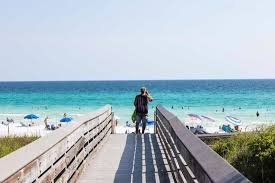
Imagine a stretch of coastline where the water is a brilliant emerald green and the sand is so white and powdery that it literally squeaks under your feet. This is the reality of Scenic Highway 30A in Walton County, Florida—home to the exclusive enclaves of Seaside, WaterColor, and Alys Beach. However, beneath this postcard-perfect surface lies a fierce, decade-long conflict known as the “beach wars.”
Ground Zero of the Florida Beach Conflict
For many visitors, the beach is a place of solace and freedom. For multimillion-dollar beachfront property owners, it is a sanctuary of privacy. This clash of ideologies has turned Walton County into ground zero for a legal battle over where private property ends and the public’s right to enjoy the shore begins.
The tension is visible. Along the 26-mile shoreline, “No Trespassing” signs are common, and private security guards under red umbrellas keep a watchful eye on beachgoers. For advocates like Dave Rauschkolb, founder of the nonprofit Florida Beaches for All, the situation is unacceptable. “Our beaches should be public,” Rauschkolb asserts, arguing that these shores have been shared for eons.
Property Rights vs. Public Use: The Legal Tug-of-War
The conflict isn’t just about umbrellas and chairs; it’s a complex legal struggle involving the U.S. Constitution and ancient English law.
- Customary Use: A legal concept suggesting that if the public has traditionally used a piece of land for recreation, they have a right to continue doing so.
- The Fifth Amendment: Property owners argue that forcing them to allow public access on their land without compensation is an unconstitutional “taking” of private property.
- The Mean High-Tide Line: In Florida, the area seaward of the mean high-tide line is generally considered public land. However, as tides shift, so does the “legal” space available for the public.
This ambiguity has left local law enforcement in a difficult position. Walton County Sheriff Michael Adkinson Jr. notes that deputies are often caught in the middle, facing criticism from both sides—labeled as “thugs” by beachgoers and “communists” by homeowners.
High-Profile Disputes and Digital Solutions
The battle has even attracted celebrity attention. Brian Littrell, a member of the Backstreet Boys, has been involved in legal disputes regarding trespassing on his beachfront property, highlighting that even the most famous residents are not immune to the friction.
In response to the confusion, activist Sara Day developed the Shoreline Defender app. This tool helps beachgoers identify the mean high-tide line in real-time, allowing them to enjoy the sand without inadvertently trespassing on private land.
What Lies Ahead for Florida’s Coastline?
As tourism continues to explode—with over 4.5 million visitors hitting Walton County’s shores last year—the pressure on existing public access points is reaching a breaking point. Real estate experts note that the conflict is even affecting the housing market, as buyers worry about the accessibility of the beaches they are paying millions to be near.
The ultimate solution may lie in a Florida constitutional amendment. Advocates are pushing for a state-wide guarantee that all beaches, from the dune line to the water, remain open to the public—similar to laws already in place in Hawaii, Texas, and Oregon.
Whether you view this as a defense of private property or a fight for public heritage, one thing is clear: the fight for the sand in Florida is far from over.



